
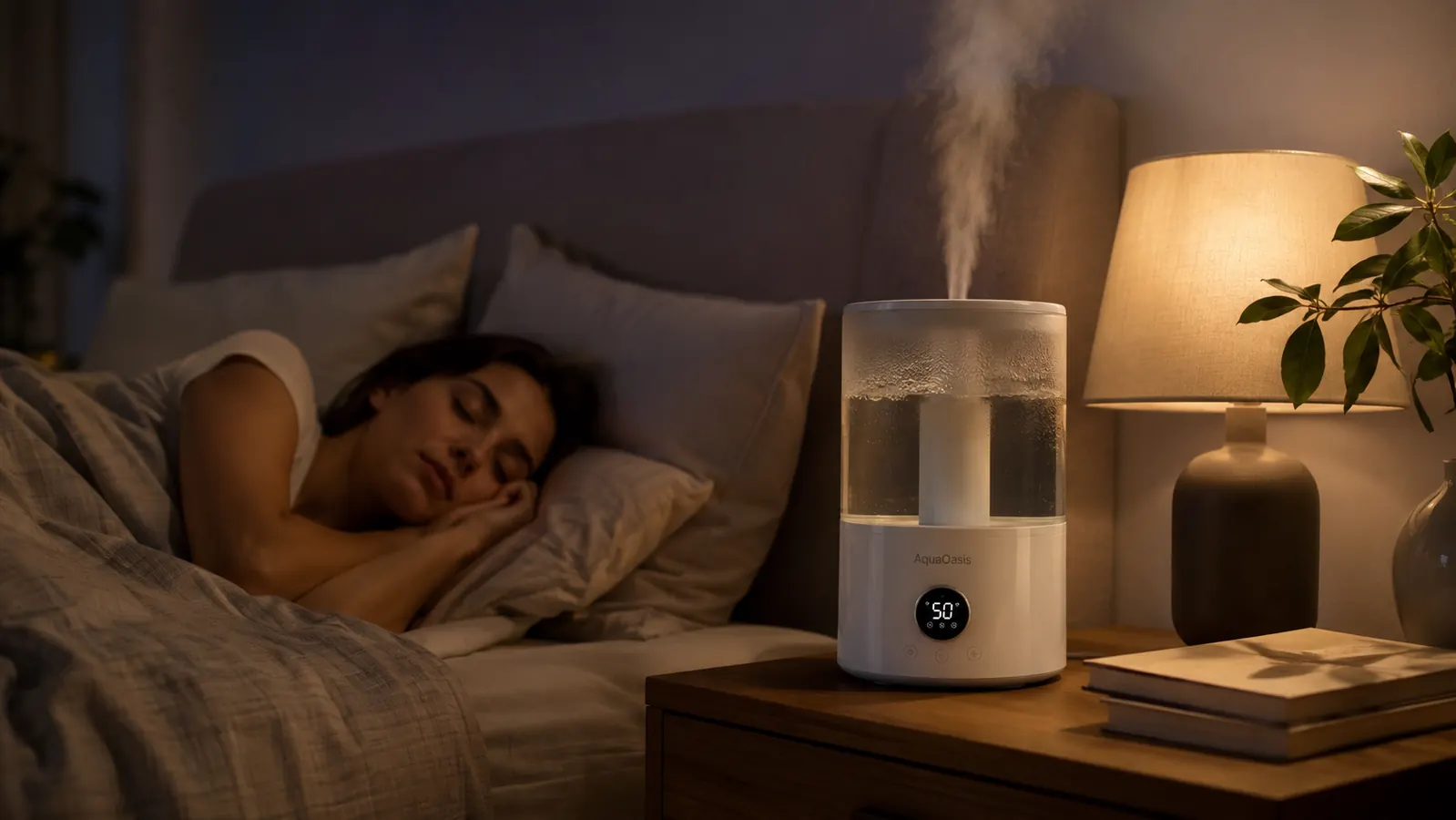
I bought the AquaOasis Cool Mist Humidifier in late October, the same week my hygrometer told me our bedroom had dropped to 19 percent relative humidity. For context, most doctors want indoor humidity somewhere between 30 and 50 percent. Nineteen percent is closer to what you'd get standing in a desert at noon. I was waking up with a dry throat every single morning, my nose bled twice in one week, and I'd started getting shocked by my own doorknobs. Something had to change before winter really settled in over Denver.
I picked the AquaOasis specifically because of the 2.2 liter tank size and the ultrasonic cool mist design, since our bedroom runs about 12 by 14 feet and I didn't want to refill a small unit every few hours. Six months and roughly 150 nights of use later, I have a real read on whether it held up, how much it actually moved the needle on our humidity, and where it started to show its limits.
The Quick Verdict
A genuinely effective, quiet humidifier for a mid-size bedroom that earns its keep every winter, with mineral buildup and a slightly fiddly mist knob as the real tradeoffs.
Amazon Check Today's Price →Waking up with a dry throat and nosebleeds every winter morning?
The AquaOasis 2.2L cool mist humidifier is built to run all night on one fill and quietly bring a dry bedroom back up to a livable humidity range, no loud fan noise, no refilling at 3am.
Amazon Check Today's Price on Amazon →How I've Used It
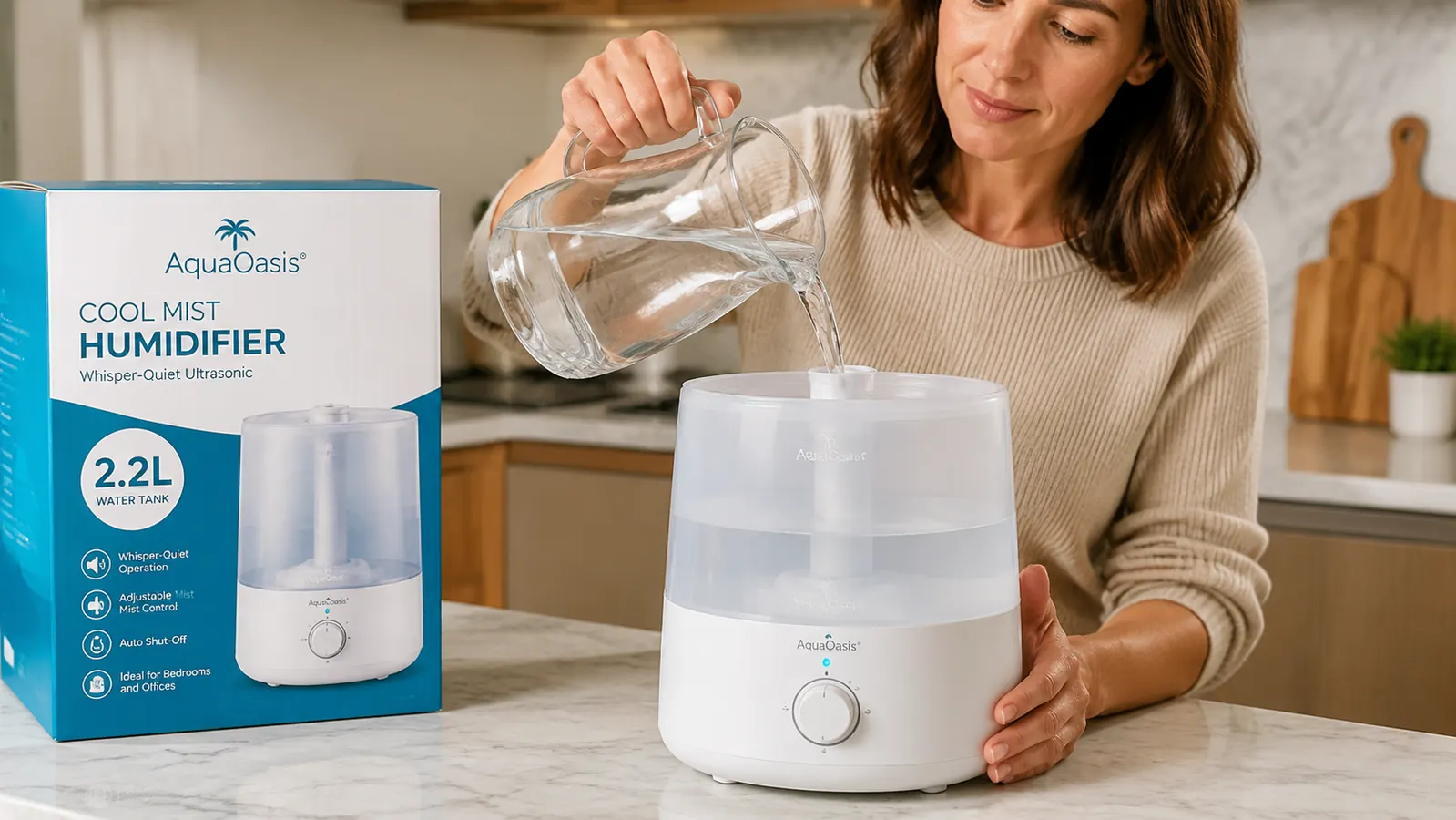
My routine has stayed almost identical since November. I fill the tank right before bed using a pitcher rather than trying to carry the whole unit to the sink, since the top-fill opening is narrow enough that lugging a full 2.2 liters of water across the house felt like an accident waiting to happen. I run it on the low to medium mist setting overnight, which lands us somewhere around 8 to 10 hours of runtime, close enough to the label's stated output that I never wake up to a dry, empty tank before my alarm goes off.
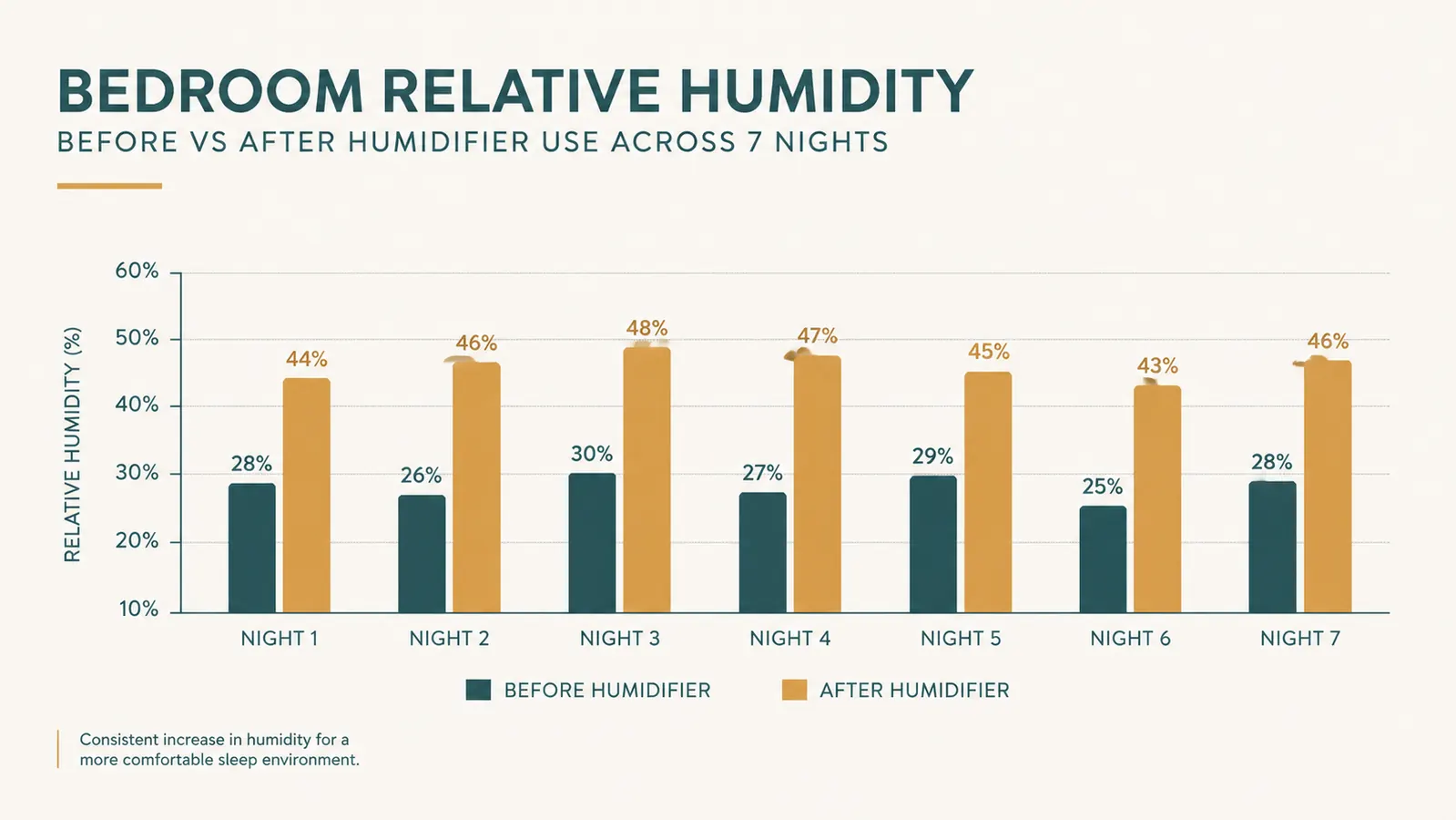
I keep a cheap digital hygrometer on the dresser across the room, and that's really how I've judged this thing the whole time rather than trusting the humidifier's built-in display, which reads a bit optimistic compared to the independent gauge. Most nights I can get the room from the low 20s up into the high 30s or low 40s percent range by morning, which is the range where my nose, throat, and the wood trim on our windows all seem happiest.
The one adjustment I made after the first month was moving the unit off the carpet and onto a small plastic tray on top of the dresser. Ultrasonic humidifiers throw a fine mist that settles as moisture on whatever surface is nearby, and our carpet started feeling slightly damp underneath it before I made that change. Once it was elevated and off soft surfaces, that problem disappeared completely.
I also experimented with the built-in aromatherapy tray in the first few weeks, adding a couple drops of eucalyptus oil on nights my sinuses felt especially clogged. It works fine and the tray keeps the oil away from the water tank itself, but I stopped bothering with it by December, mostly because plain mist did the job I actually needed and the oil pads needed their own separate cleaning to keep from getting sticky.
Mist Output and How Much It Actually Raised Our Humidity
The core question with any humidifier is whether it can keep pace with how dry your air actually is, and for a room our size, the AquaOasis has kept up through even the coldest stretches of the season. On the nights our forced-air furnace ran nearly nonstop, in the single digits outside, I still saw the room climb from around 20 percent at bedtime to the high 30s by morning. That's not the 50 percent some product listings imply you'll hit, but it's a meaningful, livable improvement, and it's the number that actually matters for symptoms like dry sinuses and cracked lips.
The mist dial itself is a manual twist knob rather than a digital percentage setting, which took some trial and error to dial in. Too high and I'd notice a faint film on the nightstand by morning. Too low and the room barely moved past 25 percent overnight. I eventually landed on a setting a little past the halfway mark that's worked consistently through the whole winter without much fussing.
One thing worth knowing going in is that a larger or more open room will dilute the effect. We tried running it briefly in our living room, which is closer to 300 square feet and open to the kitchen, and the humidity gain there was much smaller, more like 5 to 8 percentage points instead of the 15 to 20 we consistently see in the closed bedroom. This is a bedroom-and-small-room tool, not a whole-floor solution.
Noise Level Through a Full Winter of Nightly Use
Noise was actually my biggest worry before buying, since I'm the kind of light sleeper who can be kept awake by a dripping faucet two rooms away. The AquaOasis uses an ultrasonic vibrating plate rather than a fan, so there's no whirring or motor hum at all. What you do hear is a very faint trickling or bubbling sound from the water moving inside the tank, especially in the first hour after a fresh fill, and an occasional soft gurgle as the tank empties toward the bottom.
Over 150 nights, I've genuinely never had it wake me up or keep me from falling asleep, and my husband, who notices far less than I do, hasn't mentioned it once. If anything, the faint water sound blends into background noise the same way a fan would, just much quieter. Compared to the evaporative humidifier we had years ago with its constant low fan hum, this is a real upgrade for anyone sensitive to noise at night.
Cleaning and the Mineral Buildup Nobody Warns You About
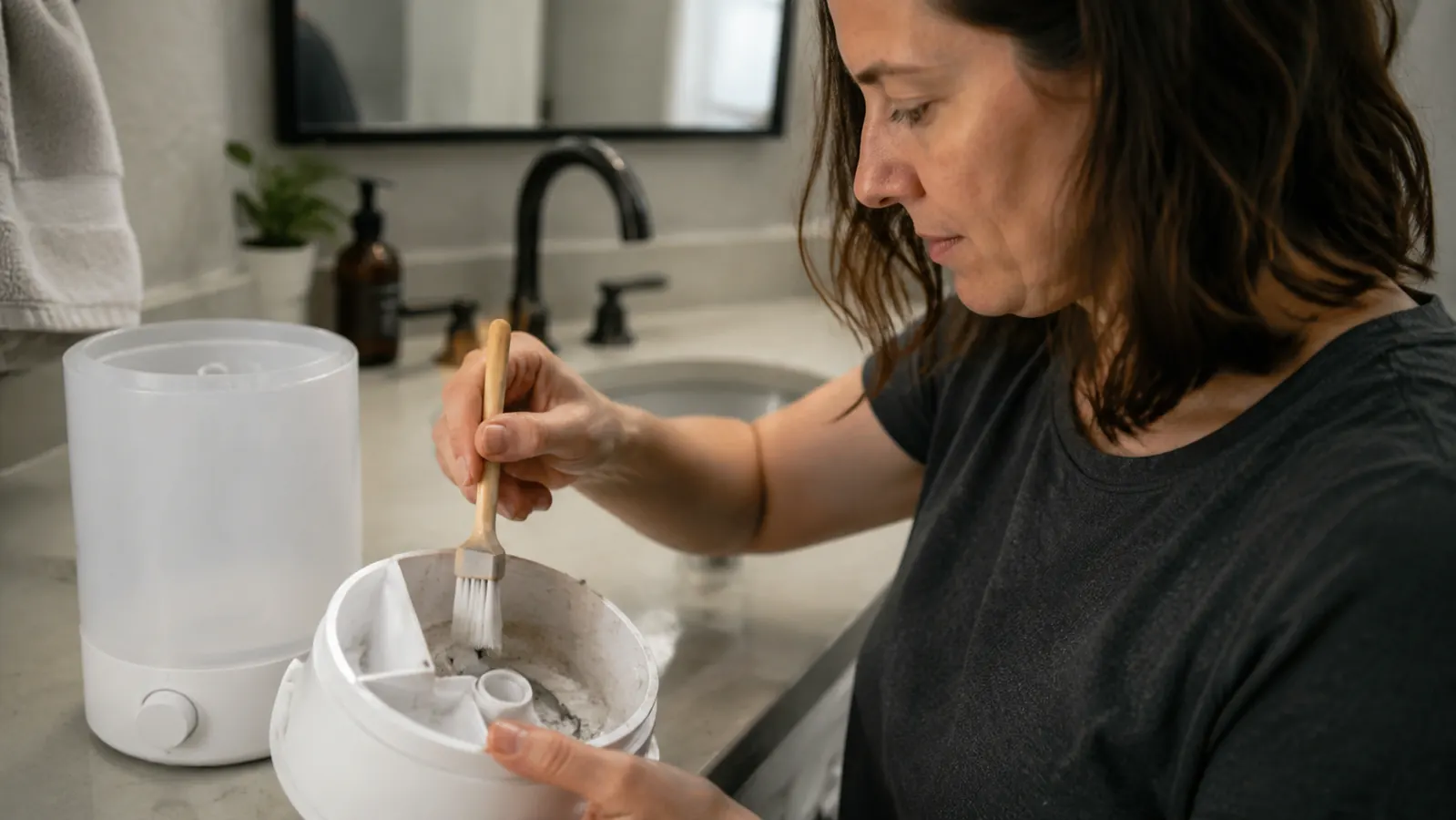
This is the part of ultrasonic humidifier ownership that every glowing five-star review tends to skip over. We have moderately hard tap water in our area, and within about ten days of regular use, I started noticing a thin white crust forming around the mist outlet and the inside base of the tank. That's mineral scale, and it's a normal byproduct of ultrasonic mist generation with anything other than distilled water, not a defect in the unit itself.
I now do a full clean once a week, a mix of white vinegar and water swished in the tank for about twenty minutes, followed by a soft brush around the mist plate to knock loose any buildup. It takes maybe ten minutes total. When I skipped this for closer to three weeks during a busy stretch in January, the mist output visibly weakened and I could see a fine white dust settling on the dresser near the outlet, which is the mineral residue getting aerosolized along with the water.
Switching to distilled water instead of tap cut the buildup dramatically, roughly a quarter of what I was seeing before, though it does mean an extra grocery store stop every couple of weeks. If you have hard water and don't want to deal with either the weekly scrubbing or buying distilled water, that's a real cost of ownership worth factoring in before you buy, not an occasional annoyance.
Tank Capacity and Overnight Runtime
The 2.2 liter tank has been the right size for our needs. On the low setting it comfortably runs past 10 hours, which covers a full night with room to spare. On medium, where I actually run it most nights, I'm getting closer to 8 hours, which still gets me from lights-out to my alarm without an empty tank shutting the unit off at 4am. On the highest mist setting, runtime drops closer to 6 hours, so I only use that setting on the driest nights when I want to catch up the room's humidity fast before bed.
The unit has an auto shut-off when the tank runs dry, which I've tested more than once by accident after forgetting to refill it two nights in a row. It shuts off cleanly rather than running the ultrasonic plate dry, which would risk damaging it, and there's no burning smell or overheating the way I've had happen with a cheaper humidifier years ago.
Long-Term Durability After Six Months
Beyond the cleaning routine, I wanted to know whether this thing would hold up as a piece of hardware, not just as a humidity source. The plastic housing still looks essentially new, no yellowing or cracking around the base or the tank seams, even with the tank being lifted on and off the base roughly 150 times for refills. The rubber seal around the tank cap has stayed snug and hasn't started leaking, which was my biggest worry going in since that's usually the first failure point on cheaper humidifiers I've owned before.
The one component I keep an eye on is the ultrasonic plate itself, since that's the part actually generating the mist and the part most likely to degrade if scale builds up on it. Mine still produces a strong, visible mist column on the same settings I used back in November, with no noticeable drop in output. I do wonder how it'll hold up past a full year or two of daily mineral exposure, but six months in, there's been no sign of the mist weakening from anything other than my own lapses in cleaning.
What I Tried Before, and Why I Switched
Before this, we ran a warm mist humidifier for two winters, the kind that boils water internally to create steam. It did raise humidity effectively, but it ran hot enough that I worried about it around our cat, and the mineral deposits inside the heating element were even worse to clean than what I deal with now, since they baked on rather than just settling. It also added a faint warmth to the room that made our already-toasty bedroom uncomfortable most nights.
We also tried a small tabletop humidifier with a 500 milliliter tank, marketed more for desks than bedrooms, and it simply couldn't keep up. It needed refilling twice a night and never got our humidity readings above the mid-20s no matter how long we ran it. Stepping up to the AquaOasis's larger tank and cool mist output solved both problems at once, no more middle-of-the-night refills and a humidity number that actually reaches a comfortable range by morning.
What I Liked
- Genuinely quiet ultrasonic mist with no fan hum to disturb light sleepers
- 2.2L tank comfortably covers a full night on low or medium settings
- Cool mist means no burn risk and no added warmth to the room
- Reliably raised our bedroom humidity from the high teens into the high 30s or low 40s
- Auto shut-off worked cleanly every time the tank ran dry
- Housing and seals show no wear after six months of daily use
Where It Falls Short
- Mineral buildup around the mist outlet requires weekly cleaning with hard tap water
- Manual mist dial takes some trial and error to find the right setting
- Built-in humidity display reads noticeably higher than an independent hygrometer
- Effect is much weaker in open or larger rooms than a closed bedroom
- Top-fill opening is narrow enough that refilling at the sink can be awkward
It's not a magic fix and it needs a weekly scrub to stay honest, but six months in, it's the reason I stopped waking up with a dry throat and a bloody nose every morning.
Who This Is For
This is a strong pick for anyone in a dry climate or a home with forced-air heat trying to bring a single bedroom back to a comfortable humidity range overnight, especially light sleepers who can't tolerate a fan-driven humidifier's noise. It's also worth it for anyone dealing with dry-air symptoms like nosebleeds, cracked lips, static shocks, or waking up with a scratchy throat, since those are exactly the problems a consistent overnight humidity boost tends to resolve.
Who Should Skip It
If you have hard tap water and know you won't keep up with weekly cleaning, the mineral buildup will shorten your satisfaction with this unit fast, and you should either commit to distilled water or look at a different humidifier style entirely. Anyone trying to humidify an open floor plan or a room much larger than ours will likely find the output underwhelming compared to a console-style humidifier built for bigger spaces. And if you want a unit that reads out a trustworthy exact humidity percentage without a separate gauge, the built-in display here isn't precise enough to rely on alone.
If dry winter air has been wrecking your sleep, this is worth the try.
Six months in, the AquaOasis humidifier is still the thing I refill every night before bed, mineral buildup and all. See current availability and today's price on Amazon.
Amazon Check Today's Price on Amazon →