
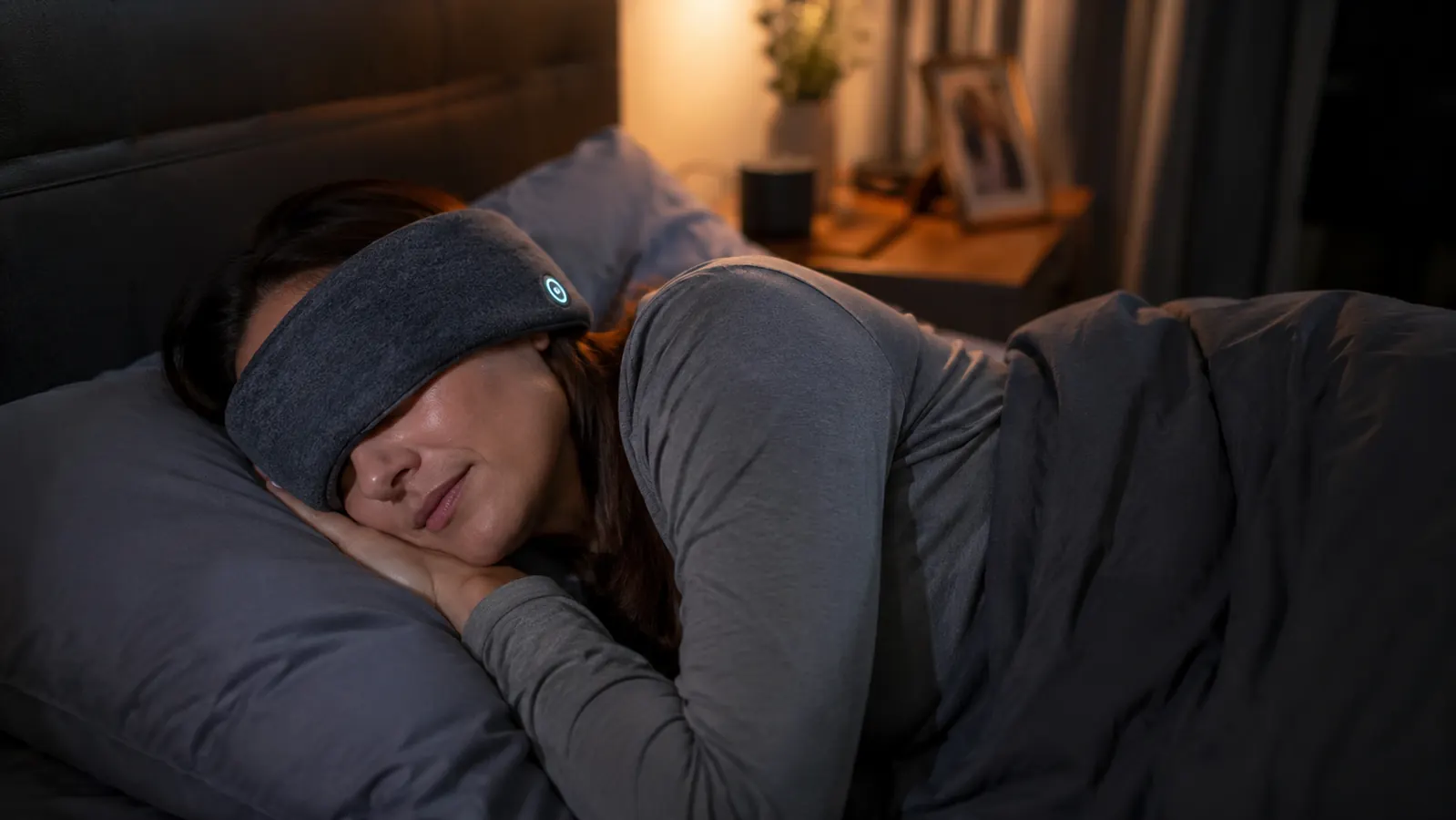
I've been a light sleeper my entire adult life, but it got a lot worse the year my husband Dave started snoring like a diesel engine idling in our driveway. I tried everything before I landed on the Perytong Sleep Headphones headband: foam earplugs that fell out by 2am, a white noise app played through my phone speaker, even sleeping in the guest room a few nights a week. None of it fixed the actual problem, which is that I needed sound in my ears without anything hard or wired poking into the side of my face when I rolled onto my side. I also run cold at night compared to Dave, so a sleep mask that trapped heat on my face never worked for me either.
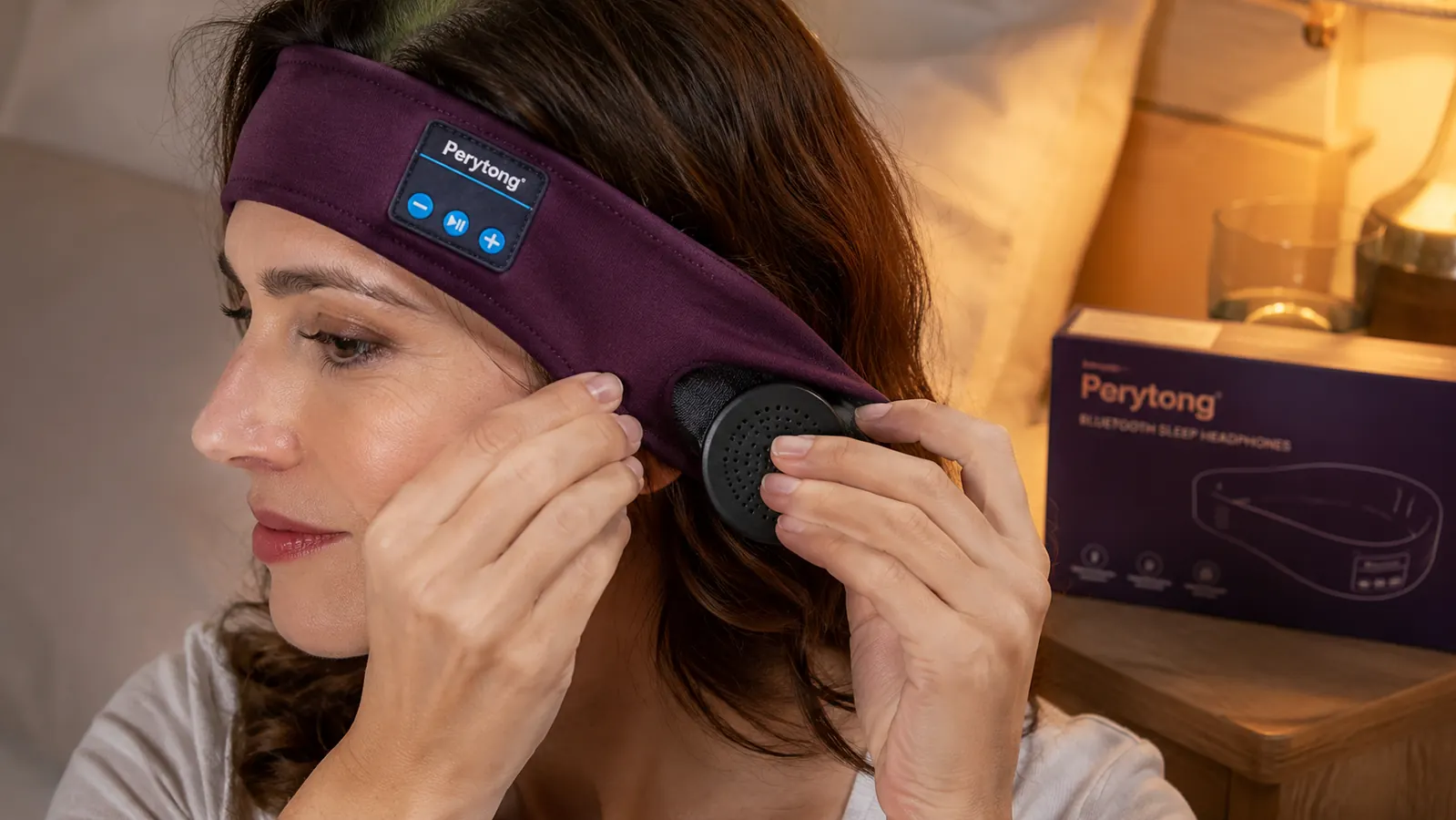
I bought the Perytong headband in February, mostly out of skepticism. It's a stretchy fabric headband with two thin, flat Bluetooth speakers sewn into pockets over where your ears sit. No earbuds, no wires, nothing sticking out. Five months and roughly 140 nights of use later, I have a real answer on whether it works, and it's more nuanced than the five-star reviews on Amazon suggest. This is the long-term version of that answer, not a first-week impression.
The Quick Verdict
A genuinely comfortable way to fall asleep to audio on your side, with real tradeoffs in sound quality and speaker placement that shift as you move at night.
Amazon Check Today's Price →Tired of earbuds falling out or digging into your ear at 2am?
The Perytong headband swaps hard earbuds for flat, thin speakers built into a soft fabric band, so you can sleep on your side without anything jammed against your skull.
Amazon Check Today's Price on Amazon →How I've Used It
My routine is almost always the same. I put the headband on after I brush my teeth, connect it to my phone over Bluetooth, and start either a sleep story or rain sounds through the Calm app. I'm a strict side sleeper, alternating between my left and right side through the night, so the headband gets tested in exactly the way it's marketed for. I charge it maybe every third or fourth night with the included USB-C cable, usually while I'm in the shower in the morning. On nights I forget to charge it, it's let me down maybe four or five times total, dying around 3am and waking me up in silence rather than gently.
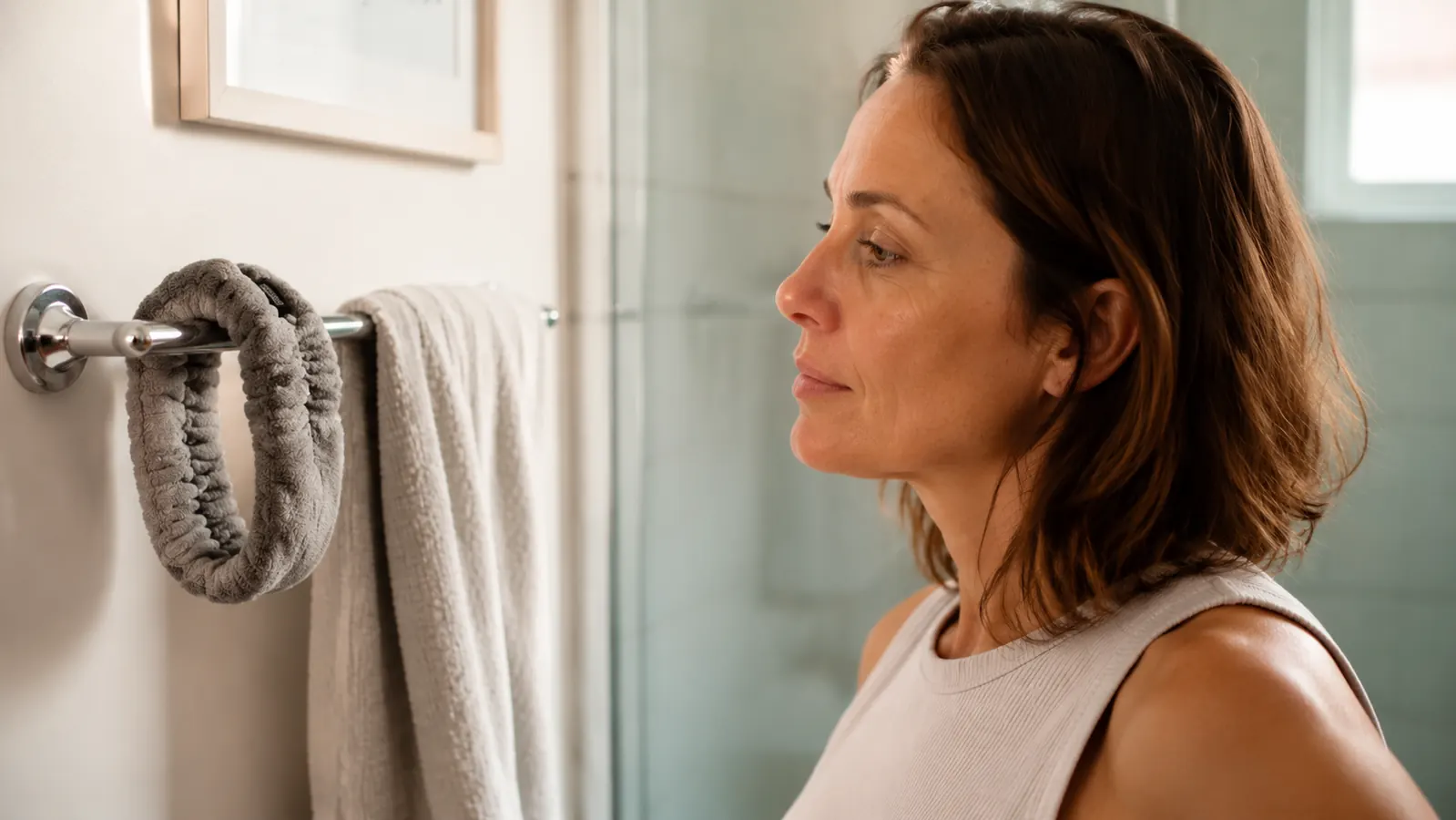
I washed it by hand roughly once every two weeks for the first three months, then dropped to once a month once I realized the sweat buildup wasn't as bad as I expected. The band air dries overnight on our towel bar and hasn't shrunk or lost shape in five months, which honestly surprised me more than anything else about this product.
The one habit I had to build was repositioning the speakers before I fall asleep. They shift slightly when you first put the band on, and if a speaker sits half an inch off from directly over your ear canal, the sound gets noticeably quieter on that side. It took me about two weeks to stop noticing this and start doing it automatically.
The Design: Why a Headband Beats Earbuds for a Side Sleeper
The core idea here is simple and it's the reason I kept using it past the first week. Traditional earbuds, even the small ones marketed for sleep, have some amount of hard shell that presses into your ear canal or the cartilage around it. Lie on your side for six or seven hours and that pressure becomes real discomfort, sometimes enough to wake you up. The Perytong band avoids this entirely because the speakers are flat discs, maybe 2mm thick, sewn into stretch fabric pockets. There's nothing rigid touching your ear.
The band itself is a nylon-spandex blend, similar to what you'd find in athletic headwear. It comes with a slightly adjustable fit, though it's really more of a stretch-to-fit design than a true multi-size system. I have a fairly average head circumference and it fits snugly without feeling tight enough to give me a headache, which was my biggest fear going in given how sensitive I am to anything pressing on my temples overnight.
Bluetooth 5.2 handles the connection, and the pairing has been reliable. I've had maybe three nights out of 140 where it disconnected mid-sleep and I woke up to notice the audio had stopped, which is a low enough failure rate that I stopped worrying about it by month two.
Battery Life and Sound Quality After Five Months
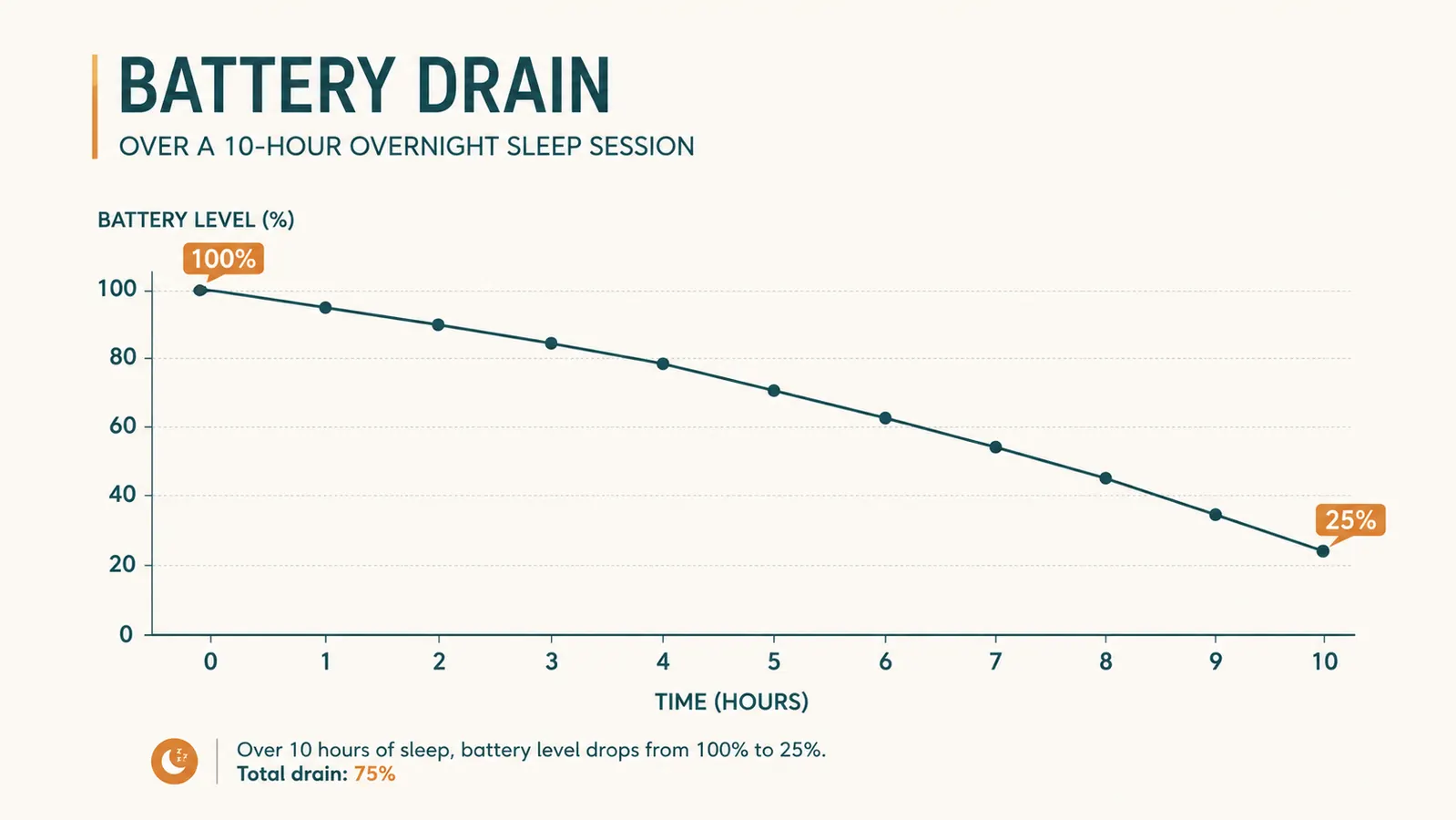
Perytong advertises around 10 hours of playback on a full charge, and in my actual use that number has held up closely, usually landing between 9 and 10.5 hours depending on volume. I keep mine around 40 percent volume, which is loud enough to mask Dave's snoring but quiet enough that I can still hear my alarm through the fabric in the morning.
Five months in, I haven't noticed any meaningful drop in how long a charge lasts, which is the thing I was most worried about with a built-in rechargeable battery I can't swap out myself. If that battery does degrade the way phone batteries do over a year or two of daily charging, that's a real long-term cost, since the whole headband becomes useless once the battery won't hold a charge, not just the speaker.
Sound quality is where I have to be honest and say it's fine, not great. These are not going to replace a real pair of headphones for critical listening. Podcasts and spoken sleep stories sound clear and full. Music, especially anything with bass, sounds thin and a little tinny. That's a fair tradeoff for what this product is actually for, but I want to set expectations correctly since some Amazon reviews make it sound like concert-quality audio, and it isn't.
Comfort Tradeoffs Nobody Mentions
The biggest tradeoff is heat. The band covers your ears and a good portion of your head, and on warmer nights, especially before we started running the ceiling fan through summer, I noticed my ears getting warm under the fabric. It's not unbearable, but if you already run hot at night, this is worth knowing before you buy.
The second tradeoff is speaker placement drift. If you toss and turn a lot, which I do less now than I used to but still do some nights, the band can shift and the speaker ends up sitting over your temple instead of your ear. When that happens the audio goes quiet enough that I've woken myself up trying to readjust it half asleep. It's a minor annoyance, but it happens often enough over five months that I'd call it a real limitation, not a one-off.
The third thing worth flagging is that the seams where the speaker pockets are sewn in do create a very slightly raised ridge you can feel if you press your ear directly against the mattress or a firm pillow. It's not painful, just noticeable on nights when I'm sleeping flatter than usual.
What I Tried Before, and Why I Went Back to This
Before the headband, I went through two other approaches. The first was standard wireless earbuds marketed for sleep, small stem-free ones. They were more comfortable on my back, but the second I rolled onto my side, the pressure on my outer ear was enough to wake me within an hour, every single time. I returned them after ten days.
The second approach was foam earplugs paired with a phone speaker playing white noise across the room. This solved the pressure problem but created a new one: the volume was inconsistent depending on which way I was facing, and Dave complained the low hum kept him up too. It also meant I couldn't listen to a sleep story or podcast, since the audio had to be generic enough not to bother him.
The headband solves both problems at once. It's soft enough to sleep on your side in, and the audio stays in my ears instead of filling the room, so Dave sleeps through it completely undisturbed. That combination is really the whole value proposition, and after trying the alternatives, it's the reason I've stuck with it.
Durability After Five Months of Nightly Use
I want to be specific here because most reviews I read before buying only covered the first two or three weeks. At the five-month mark, the elastic in the band has not gone loose the way an old headband or hair wrap eventually does. It still snaps back to shape after washing, and it still feels as snug on my head as it did the first night, which tells me the fabric blend is holding its stretch better than I expected for something worn nightly and washed regularly.
The fabric itself has picked up a small amount of pilling on the inside surface, the part that presses against your scalp and hairline. It's cosmetic, not functional, and you'd only notice it if you were looking closely, but it's there. The stitching around both speaker pockets is still fully intact with no fraying, which matters since that's the seam under the most repeated stress from stretching the band on and off every night.
Sound output on both speakers has stayed even and consistent, no rattling, no static, no one-sided volume drop that would suggest a failing driver. Given how many nights this thing has been stretched, slept on, balled up in a drawer, and machine charged, I expected some sign of wear by now, and the fact that I can't point to one beyond minor pilling is the strongest argument I can make for the long-term build quality.
What I Liked
- No hard earbuds pressing into your ear when side sleeping
- Battery genuinely lasts close to the advertised 10 hours
- Machine washable band held up over five months without shrinking
- Bluetooth 5.2 connection has been reliable night after night
- Thin profile means it doesn't feel bulky under a pillow
- Elastic and stitching show almost no wear after 140 nights
Where It Falls Short
- Speakers can shift off-ear if you toss and turn a lot
- Can run warm on hotter nights with the ears fully covered
- Sound quality is fine for spoken audio but weak for music with bass
- Battery is built-in and non-removable, a real risk for long-term durability
- Fit is stretch-to-size rather than truly adjustable
- Minor fabric pilling develops on the inner scalp-facing surface
It's not perfect audio and it's not a perfect fit every single night, but it's the first thing in years that let me fall asleep on my side without something hard jammed against my ear.
Who This Is For
This is built for side sleepers who want audio, whether that's sleep stories, white noise, podcasts, or a meditation app, without the pressure and discomfort of traditional earbuds. It's also a solid option for anyone sharing a bed with a snorer or a partner on a different sleep schedule, since the sound stays contained to your own ears instead of filling the room. If you fall asleep to something in your ears most nights already, this is a meaningful upgrade in comfort over what you're probably using now, and after five months I'd buy it again knowing everything I know now.
Who Should Skip It
If you're an audiophile who cares about rich, detailed sound even for background sleep audio, this will disappoint you, the speakers just aren't built for that. Back sleepers who don't have the earbud pressure problem to begin with may not need to switch, since a normal pair of earbuds will sound noticeably better. And if you run hot at night and already struggle with overheating, covering your ears with fabric for eight hours might work against you rather than for you.
If side-sleeping with earbuds has never worked for you, this is worth the try.
Five months in, the Perytong headband is still the thing I reach for every night, sound tradeoffs and all. See current availability and today's price on Amazon.
Amazon Check Today's Price on Amazon →