
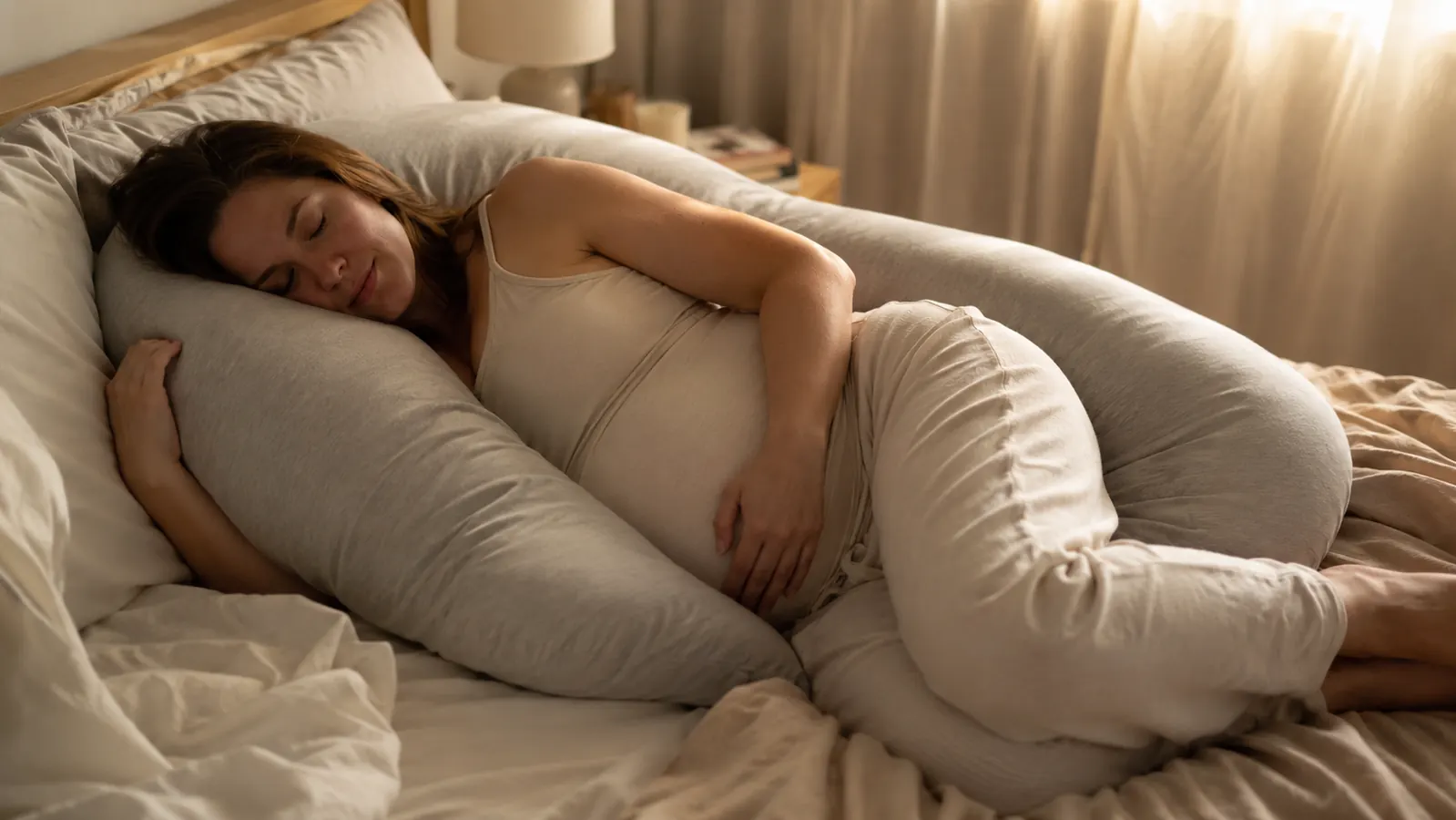
At 22 weeks pregnant, I stopped being able to sleep through the night. Not because of heartburn or kicks yet, those came later, but because I genuinely could not find a position that didn't leave my hips aching by 3 a.m. I'd wake up, shove a regular pillow between my knees, drift off, and wake again an hour later when it slid out. I tried two throw pillows stacked under my belly. I tried a rolled-up comforter behind my back. None of it lasted the whole night.
I ended up buying the Queen Rose U-shaped pregnancy pillow after a friend who'd had her second baby six months earlier told me it was the only thing that got her sleeping in one position for more than two hours straight. I was skeptical of a budget pillow fixing what felt like a structural problem with my body, but I was also desperate enough to try almost anything. I've now slept on it for five months, through the rest of my second trimester and most of my third, and I want to walk through what actually changed and what didn't.
The Quick Verdict
It solved my hip and lower back pain within about a week and held up through five months of nightly use, though the cover runs warmer than advertised and it takes up serious bed space.
Amazon Check Today's Price →Tired of stacking pillows that slide out by 2 a.m.?
The Queen Rose U-shaped pillow wraps around your whole body in one piece, so there's nothing to reposition when you roll over.
Amazon Check Today's Price on Amazon →How I Tested It
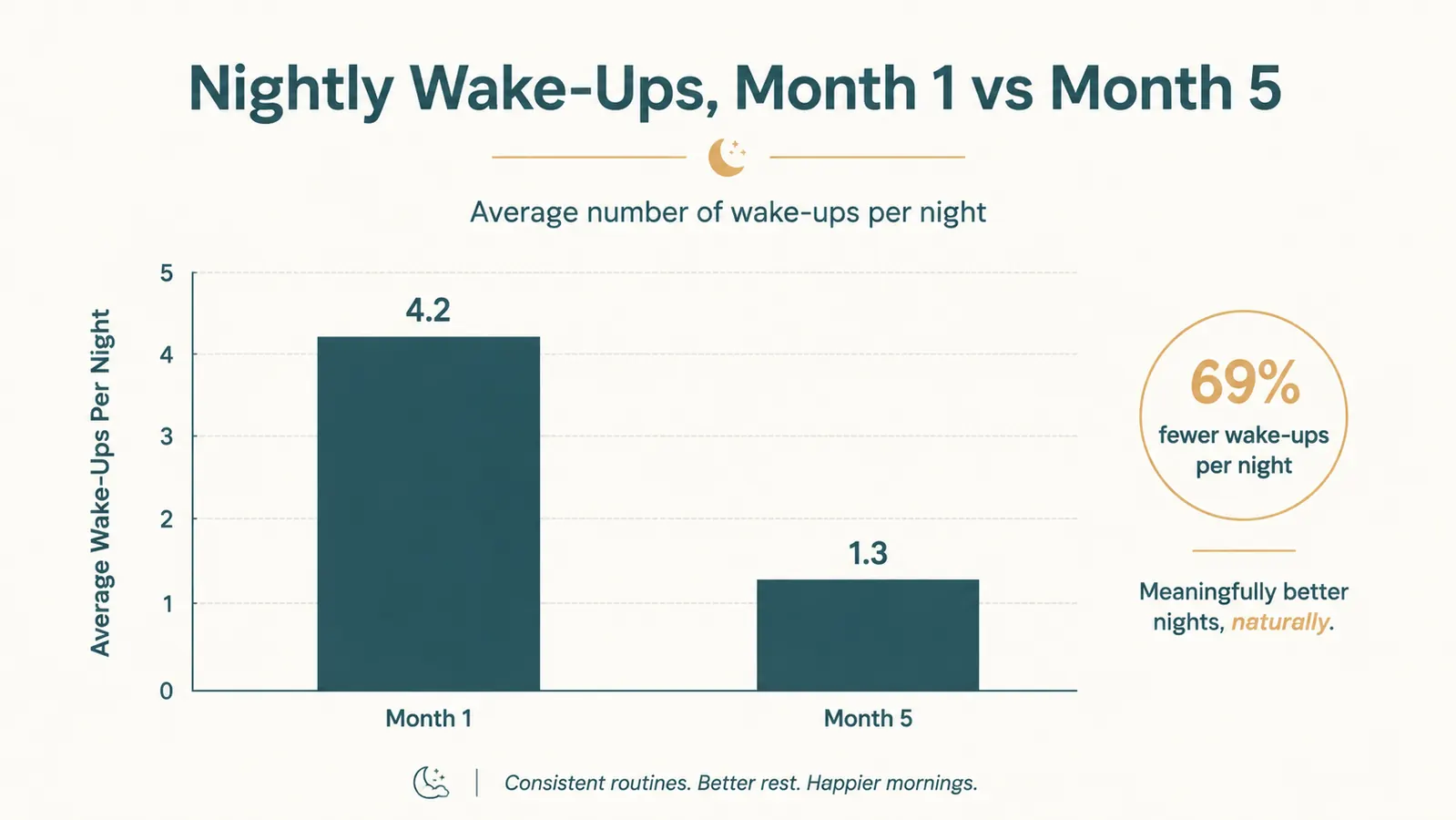
I didn't just sleep on it and call it a review. I tracked my nights for the first six weeks in a notes app on my phone, logging roughly what time I woke up, whether it was for a bathroom trip or just discomfort, and how my hips and lower back felt in the morning on a rough 1 to 5 scale. I also used it in three different configurations: the full U-wrap with my head resting in the curve, the pillow folded in half as a wedge behind my back only, and eventually, in the third trimester, with one arm draped over the top arm of the U instead of tucked underneath it.
My husband, who does not love sharing a queen bed with something the size of a full-grown person, also weighed in more than once. I'll get to that. I also compared it directly against the setup I'd been using before, which was a firm knee pillow plus two standard bed pillows arranged under my belly and behind my back, so I'd have a real baseline instead of just guessing whether the new pillow was actually better or just newer and more novel.
For context on my situation: I'm 5'6", was sleeping almost exclusively on my left side per my OB's recommendation, and my main complaints going in were hip pressure, lower back ache, and restless leg-adjacent twitchiness that kept waking me up. Your mileage may vary if your discomfort is mostly heartburn or rib pain, since this pillow is built around hip and belly support, not elevation. I mention that upfront because I've seen reviews that ding this pillow for not helping with acid reflux, which was never really what it was designed to do.
The First Two Weeks
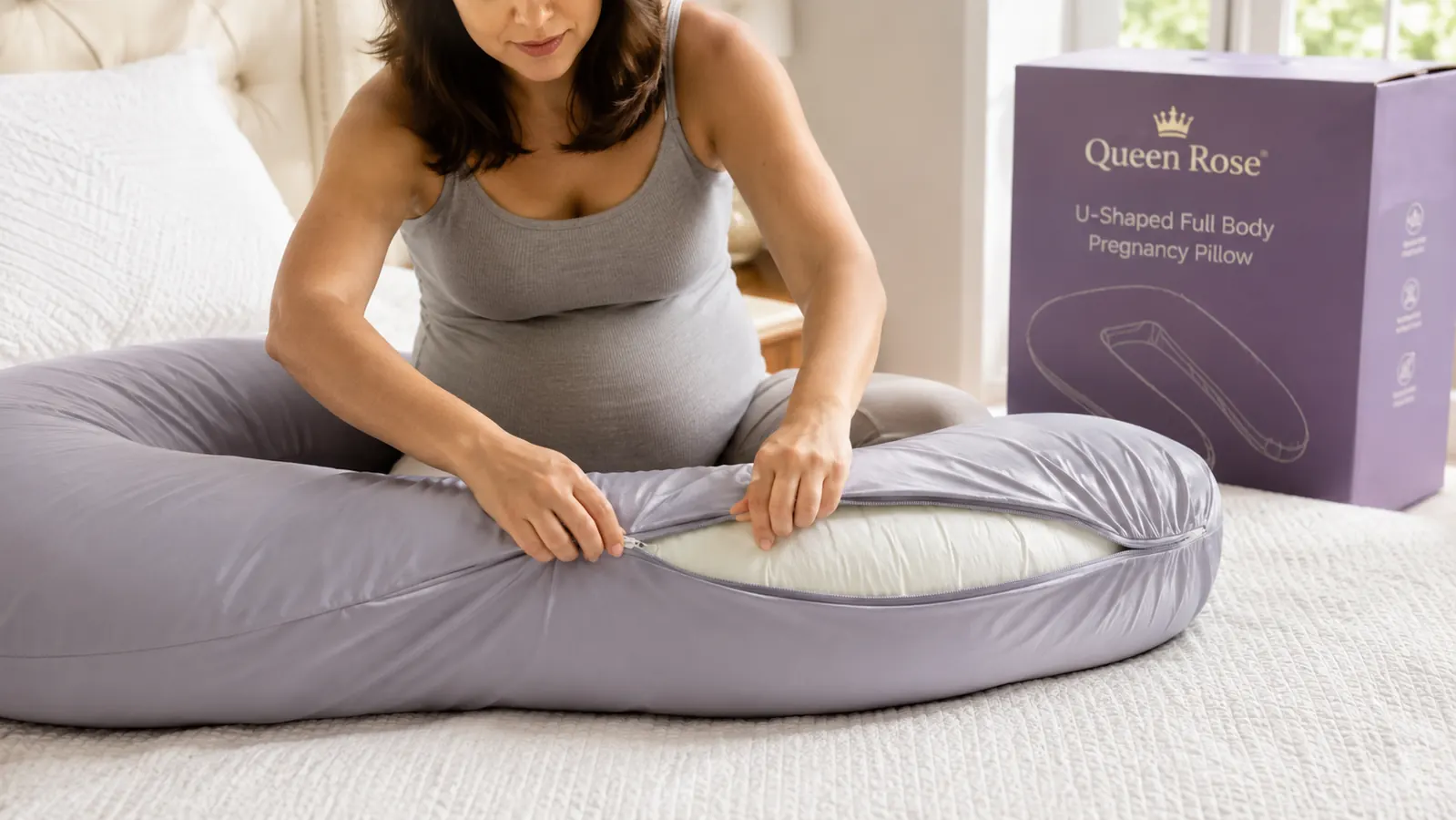
The adjustment period was real. The pillow is big, 55 inches, and it took up more than half the bed. My husband ended up sleeping on the far edge for the first few nights while we figured out the logistics, which involved him eventually agreeing to just sleep on the outside of the U instead of trying to share the inside of it with me. Once we settled into that arrangement, it stopped being a fight and became routine within about ten days.
The comfort improvement was faster than I expected. By night three, I noticed I wasn't waking up to reposition a stack of pillows anymore because the whole thing moved with me when I rolled. By night six, my morning hip soreness, which I'd been rating a 4 out of 5 most mornings, dropped to a 2. That's not nothing when you're used to swinging your legs out of bed and feeling it immediately.
The fill is a fiber blend, not memory foam, so it doesn't have that slow-recovery squish. It compresses under weight and springs back reasonably fast, which matters if you're a restless sleeper like me who changes position four or five times a night even with support. It also means it doesn't hold a body-shaped dent the way some memory foam body pillows do, which made it easier to reposition when I did need to shift.
The Cooling Cover: What's True and What's Marketing
The listing calls the cover "cooling silky," and it does feel smooth and slightly cool to the touch when you first lie down, similar to how a silk pillowcase feels for the first thirty seconds. That's a real, physical property of the fabric weave, not a gimmick. What it doesn't do is keep you cool for eight hours. By month two, during a stretch of 80-degree nights with our window AC struggling, I noticed the pillow held heat where my belly and thighs pressed into it. It wasn't unbearable, but it also wasn't meaningfully cooler than a regular cotton-blend pillowcase by 4 a.m.
I want to be specific here because I think a lot of pregnancy pillow marketing oversells the cooling claim. If you run hot at night already, especially in a third trimester where your body temperature runs a full degree or so warmer than baseline, don't expect this pillow to solve that on its own. I ended up adding a cooling gel pad on top of the belly section during the hottest weeks, which helped more than the cover did on its own.
To be fair to the design, the cover's real strength isn't temperature, it's texture. It doesn't cling or bunch the way some jersey-knit covers do when you're shifting a lot of body weight around at night, and that smoothness made a bigger practical difference to my comfort than the cooling claim ever did.
Durability Over Five Months
This is the part most reviews skip because they're written after a week of use. Here's what changed by month five. The fill has compressed slightly, maybe 10 to 15 percent softer than when it arrived, most noticeably in the section I rest my head on nightly. It hasn't gone flat or lumpy, but it's not quite as plush as day one. The zipper on the cover, which I've washed four times, still runs smoothly with no snags or missing teeth.
The seams at the two inner corners of the U, where the stitching gets the most stress from your body weight pressing into the curve, show no fraying that I can see or feel. I was honestly bracing for that to be the failure point, since it's the highest-stress area on any U-shaped pillow, and it's held up better than I expected for something at this price point.
The cover has faded very slightly from washing, going from a bright white to more of an off-white, but that's cosmetic and doesn't bother me. I also noticed the fill has started to redistribute slightly toward the outer edges of the U after repeated compression in the same spots, which I fixed by giving it a good shake and fluff about once a week, similar to how you'd maintain a down comforter.
Alternatives I Considered First
Before landing on this one, I looked at a full-length straight body pillow and a smaller C-shaped option. I passed on the straight pillow because it only supports one side of your body at a time, and I knew from experience I'd be flipping sides multiple times a night. The C-shape looked appealing for its smaller footprint, but reviews consistently mentioned it not fully supporting the lower back the way a U-shape does, which was my primary pain point.
I also briefly considered just buying two separate support pillows, a wedge for my back and a standard body pillow for my knees and belly. That's a cheaper route on paper, but after living with the all-in-one U-shape for five months, I don't think I'd go back to managing multiple pieces. The whole appeal of this style is that it moves as one unit when you do.
Who This Pillow Actually Helps
In my experience and from talking to two other moms in my due-date group who bought the same one, this pillow does its best work for people whose main issue is hip and lower back pressure from side sleeping, and for anyone who tends to roll around at night and loses a stack of regular pillows in their sleep. Because it wraps around your whole body instead of sitting in one spot, there's nothing to knock loose when you shift positions.
It's also genuinely useful after the baby arrives if you're recovering from a C-section or need support sitting up to nurse, since you can fold it into a nest shape. I haven't tested that part myself yet since I'm still a few weeks out, but two women in my group confirmed it works that way postpartum, which extends the value past just the pregnancy months.
The night I stopped waking up to reposition a stack of pillows was the night I understood why every review says the same thing: it's not a luxury item, it's a workaround for a body that won't stay comfortable on its own.

Where It Falls Short
Bed size is the first real limitation. In a queen bed with a partner, this pillow eats real estate. We made it work, but if you have a full-size bed or a partner who's already a restless sleeper, expect some friction, literal and otherwise, in the first couple of weeks.
The cooling claim is overstated for hot sleepers, as I covered above. And the fill compression, while not dramatic, is noticeable enough by month five that I'd expect to consider a replacement or a fill top-up if I were using this for a second pregnancy a couple years down the line.
One more thing nobody mentioned to me beforehand: washing it is a project. The cover comes off easily enough, but it's a large item to wash and dry, and I don't have a machine at home big enough for it, so I've been taking it to a laundromat with oversized machines. Minor, but worth knowing before you buy.
What I Liked
- Solved hip and lower back pain within about a week of consistent use
- Held its shape and seam integrity through five months of nightly use and four washes
- Stays in place as you roll over, unlike stacked regular pillows
- Doubles as postpartum nursing and recovery support based on other buyers' reports
- Fill compresses gently rather than going flat or lumpy
Where It Falls Short
- Cooling cover claim is overstated for anyone who already sleeps hot
- Takes up more than half a queen bed, which affects a shared bed
- Fill has noticeably softened by month five, roughly 10 to 15 percent
- Bulky to wash, may require a laundromat with larger machines
Who This Is For
If you're a side sleeper dealing with hip, lower back, or belly support issues in the second or third trimester, and you're currently improvising with a pile of regular pillows that don't stay put, this is the category of product built exactly for that problem. It's also worth it if you already know you tend to lose sleep to restlessness rather than a single acute pain point, since the full-body wrap adapts as you shift position.
Who Should Skip It
If you sleep hot and don't want to manage that with an additional cooling pad or a stronger AC setup, or if your bed genuinely doesn't have room for a 55-inch pillow alongside a partner, I'd think twice. Also, if your discomfort is mainly heartburn or needing to sleep elevated, a wedge pillow will likely serve you better than a hip-and-belly support pillow like this one.
Ready to stop waking up every two hours?
Five months in, this is still the pillow I reach for every night. If your hips and lower back are the problem, it's worth the shelf space.
Amazon See Current Price on Amazon →