
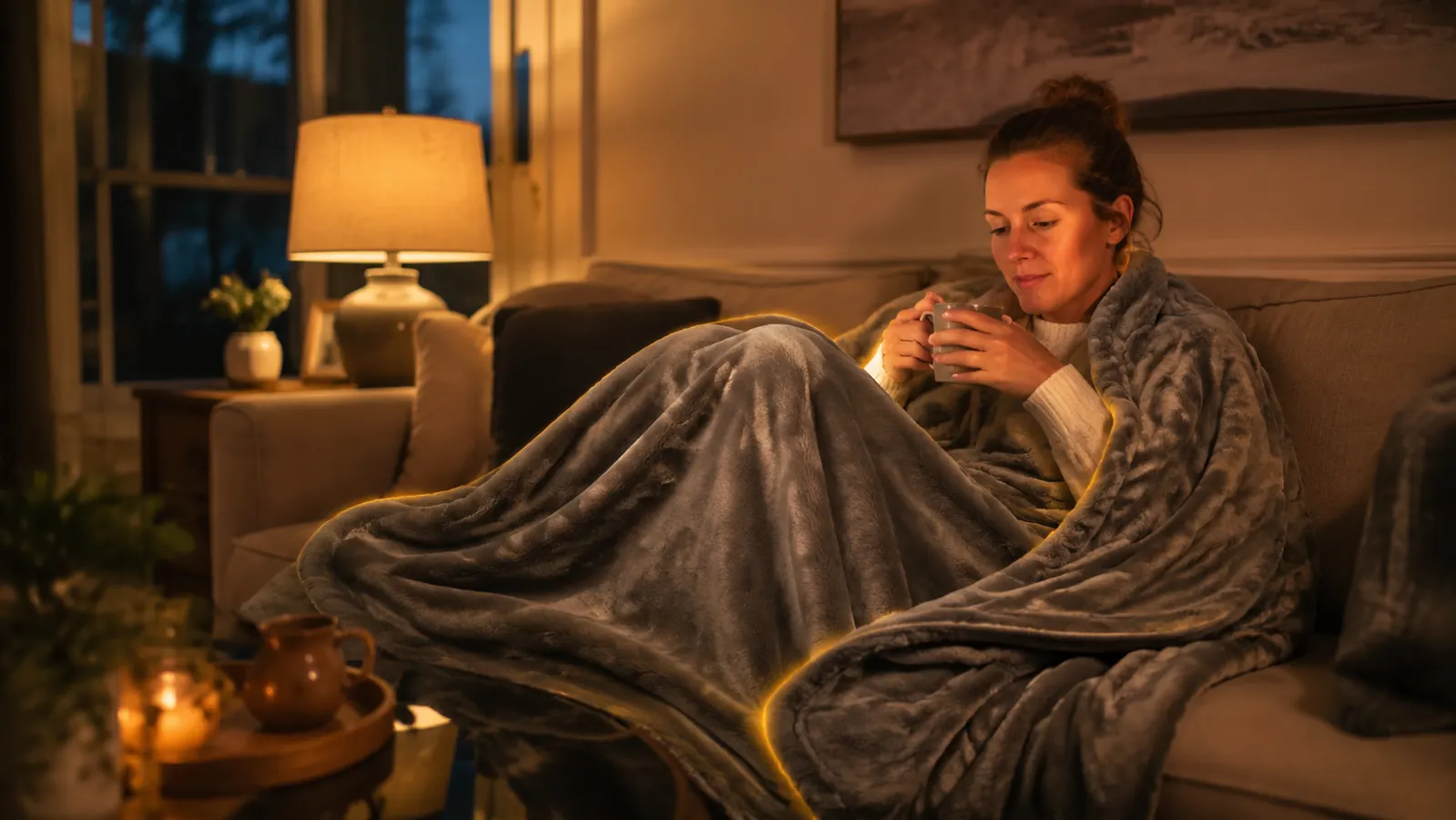
My house was built in 1962 and the previous owners apparently believed insulation was optional. By November, my living room sits about six degrees colder than the thermostat claims, and I was tired of choosing between a fifty dollar heating bill and shivering through Netflix. I bought the Bedsure heated blanket throw in early October, mostly on a whim after my sister mentioned hers, and it has not left my couch since.
This isn't a first-week impression. I'm writing this in late February after roughly four months of near-nightly use, somewhere around 90 to 100 individual sessions, plus one trip where I dragged it along in a duffel bag to my parents' equally drafty guest room. I've watched how it holds up wrapped around my shoulders during a two-hour movie, how it performs during an actual cold snap when the outdoor temperature dropped into the teens, and what the fabric looks like after being washed twice.
The Quick Verdict
A genuinely warm, low-effort space heater alternative for one person on a couch or in a bed. The preheat function is the real selling point. Docked half a point for a controller cord that's shorter than I'd like and a top heat setting I only use during actual cold snaps.
Amazon Check Today's Price →Tired of choosing between a cold couch and a higher heating bill?
The Bedsure heated blanket throw heats up in under ten minutes and costs pennies per session to run. Check today's price before the next cold snap.
Amazon Check Today's Price on Amazon →How I've Used It
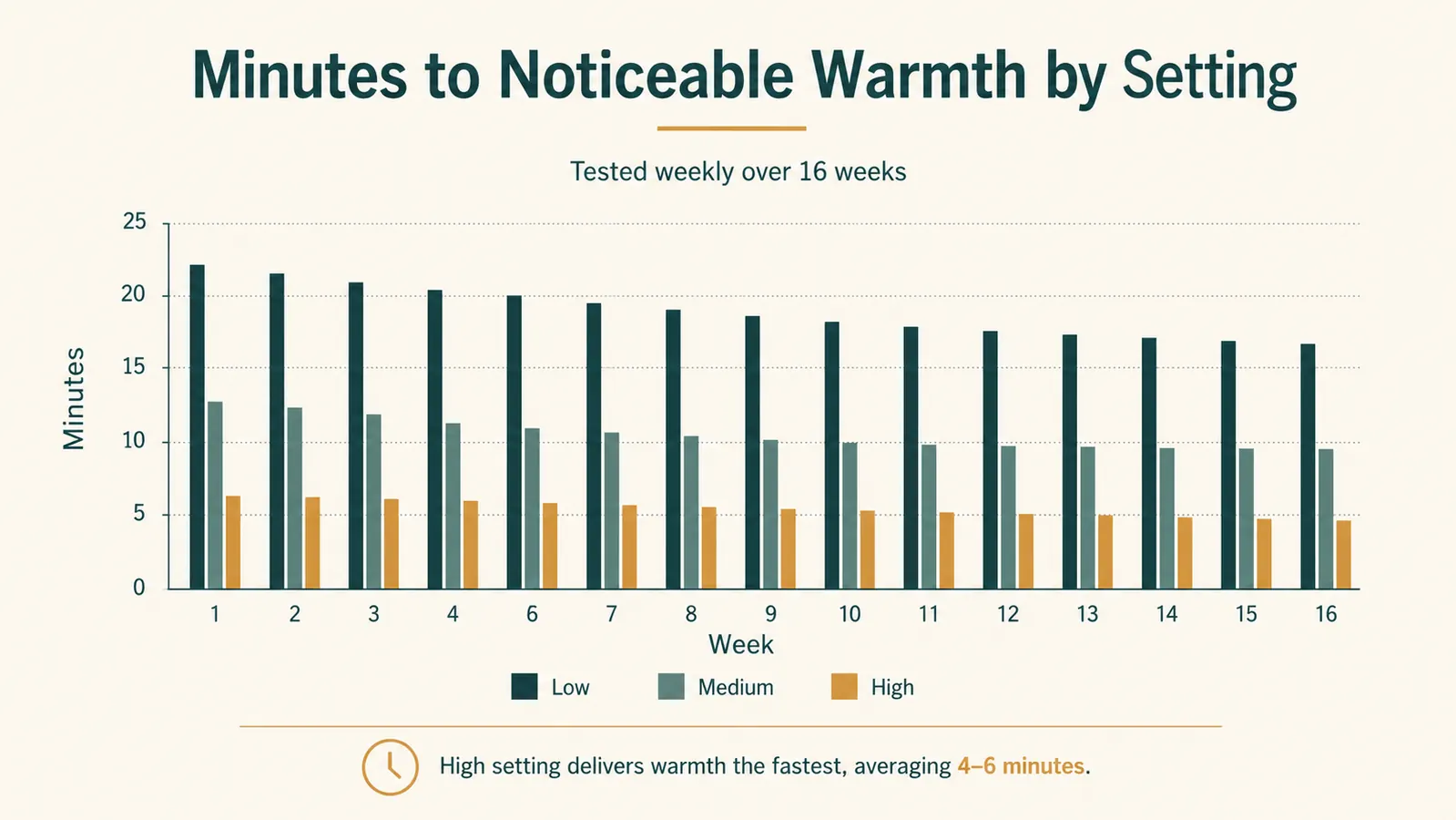
My routine is boring and consistent, which is exactly why it's a good test. Most nights between 7 and 10pm, I sit on the couch, drape the blanket over my legs and lap, and hit the preheat button on the controller. That's the feature that sold me in the first place: instead of waiting twenty minutes for the whole thing to warm up gradually on low, preheat runs the blanket at high for about ten minutes before automatically stepping down to whatever setting you actually chose. I usually set it to medium after preheat, which for me is setting 3 out of 10.
On weekends I've also used it in bed, tucked over the comforter rather than under it, since Bedsure's manual and most reviews I read before buying recommend not sleeping directly under it overnight while it's plugged in and running. I unplug it once I'm warm and drowsy, which takes about fifteen to twenty minutes. That's been my compromise: warmth to fall asleep, no cord running all night.
The one deviation from routine was a January cold snap where our furnace briefly went out for about six hours on a Saturday. I ran the blanket on high that whole afternoon while we waited on the repair tech, which is the longest continuous stretch I've put it through. It stayed warm the entire time, no overheating shutoff triggered, no hot spots, no smell. That single afternoon told me more about the product than the first month of casual use did.
As the season went on, my settings actually crept down, not up. In October, on a 68-degree evening, I was running setting 4 or 5 just to feel it working. By January, on genuinely cold nights, I found setting 2 or 3 was plenty once the preheat cycle finished, and I only reached for anything above setting 6 during that one furnace outage. I think part of that is the blanket working exactly as intended, and part of it is just getting used to how quickly it delivers warmth compared to sitting under a plain throw and waiting for my own body heat to do the work.
The Preheat Function, and Whether It's Actually Worth It
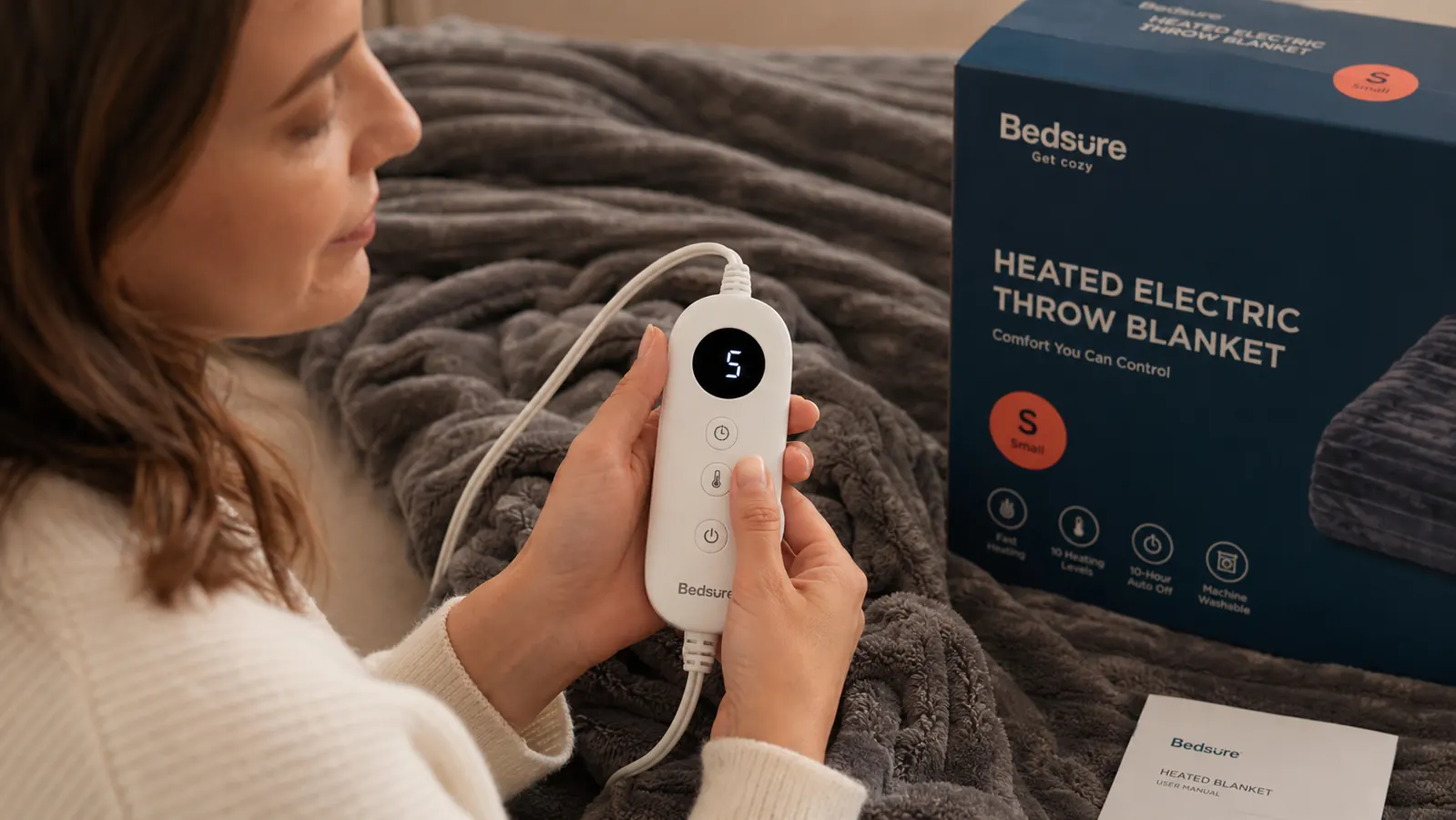
I was skeptical this would be a gimmick. It isn't. On a 62-degree evening, hitting preheat and getting genuinely warm within eight to ten minutes versus the twelve to fifteen minutes it takes running straight on medium from a cold start is a real, noticeable difference, especially on nights when I'm just trying to get warm enough to stop complaining about it before my husband gets home from his shift. Setting the blanket on high without preheat gets you to warm faster than starting cold on low, but it also means the blanket spends longer at its hottest setting than you probably want for comfort, and I've found high alone tends to feel almost too warm on my legs within fifteen minutes.
The controller itself is a simple plug-in unit with a digital display, a preheat button, and a dial for the ten heat settings. It's intuitive enough that my mother-in-law, who is not what I'd call tech-forward, figured it out in about thirty seconds during a visit in December. My one real complaint here is the cord length between the controller and the wall outlet, which is roughly six feet. On my couch, where the nearest outlet is behind an end table about eight feet away, I've had to run an extension cord, which isn't ideal for a product marketed around convenience.
There's also a built-in auto shut-off after two hours, which resets if you press any button. I like this. It means I can't fall asleep on the couch mid-movie and leave the thing running all night by accident, which was one of my actual safety concerns before buying. The display also flashes briefly when the timer resets, which took me a couple of uses to notice, but it's a nice quiet confirmation that the safety feature is actually doing something rather than a spec on a box.
Fabric, Warmth, and How It's Held Up After Two Washes
The throw is a soft flannel on one side, in the 50 by 60 inch size I bought, which is enough to cover my lap and shoulders when I'm sitting cross-legged but wouldn't fully cover two adults on a couch. Bedsure also sells this in a queen size, and if you're planning to share it regularly, I'd size up. Four months in, the flannel still feels soft, not pilled or matted the way a cheaper throw blanket starts to feel by month two.
I've washed it twice, both times on the gentle cycle in cold water with the controller unplugged and detached, which the care label requires. Bedsure specifically warns against dry cleaning, ironing, or bleaching, and against washing with the controller still connected, all of which I followed to the letter because I did not want to be the reason my house's wiring made the local news. Both times it came out of the wash looking and feeling the same as day one, no shrinkage I could measure, no wires poking through the fabric, no cold spots developing where the heating wires run.
Where I've noticed the most wear is at the corner where the controller cord attaches to the blanket. There's a slight looseness there now that wasn't present in month one, not enough to worry me yet, but enough that I've started being a little more careful about how I fold it when it's not in use, rather than just balling it up and tossing it on the ottoman. I've also started laying it flat to air dry instead of using the dryer, which the care instructions actually recommend, and I think that's helped slow down whatever wear was starting at that connection point.
What I Considered Before Buying This One
Before I settled on this blanket, I spent a weekend comparing a handful of options. A plain, non-heated flannel throw was the cheapest route, but I already owned three of those and none of them solved the actual problem, which was that my body doesn't generate enough heat on its own once the temperature drops. A space heater was the other obvious option, and I actually ran one alongside this blanket for the first couple of weeks to compare, mostly out of curiosity about which one my electric bill would notice more.
I also looked at two other electric blanket brands with similar reviews and price points before landing on Bedsure, mostly because I recognized the name from a set of sheets I'd bought a couple of years earlier that held up well. That's admittedly not the most scientific reason to pick a brand, but between the preheat feature, the ten heat settings instead of the more common three or five, and the auto shut-off, this one had the most safety and convenience features for the price at the time I bought it.
I haven't felt the need to go back and try a competitor since. The main thing that would push me to reconsider is the size. If I were buying again specifically for two people to share on a couch most nights, I'd get the queen size from the start rather than the throw, simply because I know how often I've had to negotiate blanket real estate with my husband since October.
How It Compares to Just Turning Up the Thermostat
This is the actual reason I bought it, so I tracked it. My electricity provider bills at roughly 15 cents per kilowatt-hour where I live. Running the blanket on medium for two hours a night, every night, works out to pennies per session, nowhere close to the cost of bumping the whole house thermostat up three or four degrees for the same stretch of time. My February electric bill, the first full month I ran the blanket nightly instead of nudging the thermostat, came in about 18 dollars lower than the January bill for a comparable number of degree-days, which isn't a scientific comparison, but it lines up with what I expected.
The tradeoff, obviously, is that a heated blanket warms you, not the room. If you've got kids running around or you're regularly hosting people who all need to be warm at once, this doesn't replace central heat. It replaces the specific habit of cranking the thermostat because one or two people on the couch are cold. I've gone into more detail comparing this specific blanket against a space heater, cost and safety both, in a separate piece if you want the fuller breakdown.
What I Liked
- Preheat function genuinely cuts warm-up time in half compared to starting cold on a low setting
- Ran continuously for six hours on high during a furnace outage with no overheating or shutoff issues
- Flannel side held up through two washes with no pilling or shrinkage I could measure
- Auto shut-off after two hours is a real safety feature, not just a spec sheet line
- Noticeably cheaper to run nightly than raising the whole-house thermostat
- Ten heat settings give finer control than the three or five settings on comparable blankets I looked at
Where It Falls Short
- Controller cord is short, about six feet, which meant an extension cord for my setup
- 50x60 size is really a one-person blanket, not built for sharing on a couch
- Slight looseness developing at the cord attachment point after four months
- Not recommended for sleeping under overnight while plugged in, per the manual
The single afternoon our furnace died and this thing ran on high for six straight hours told me more about it than the first month of casual, easy use ever did.
Who This Is For
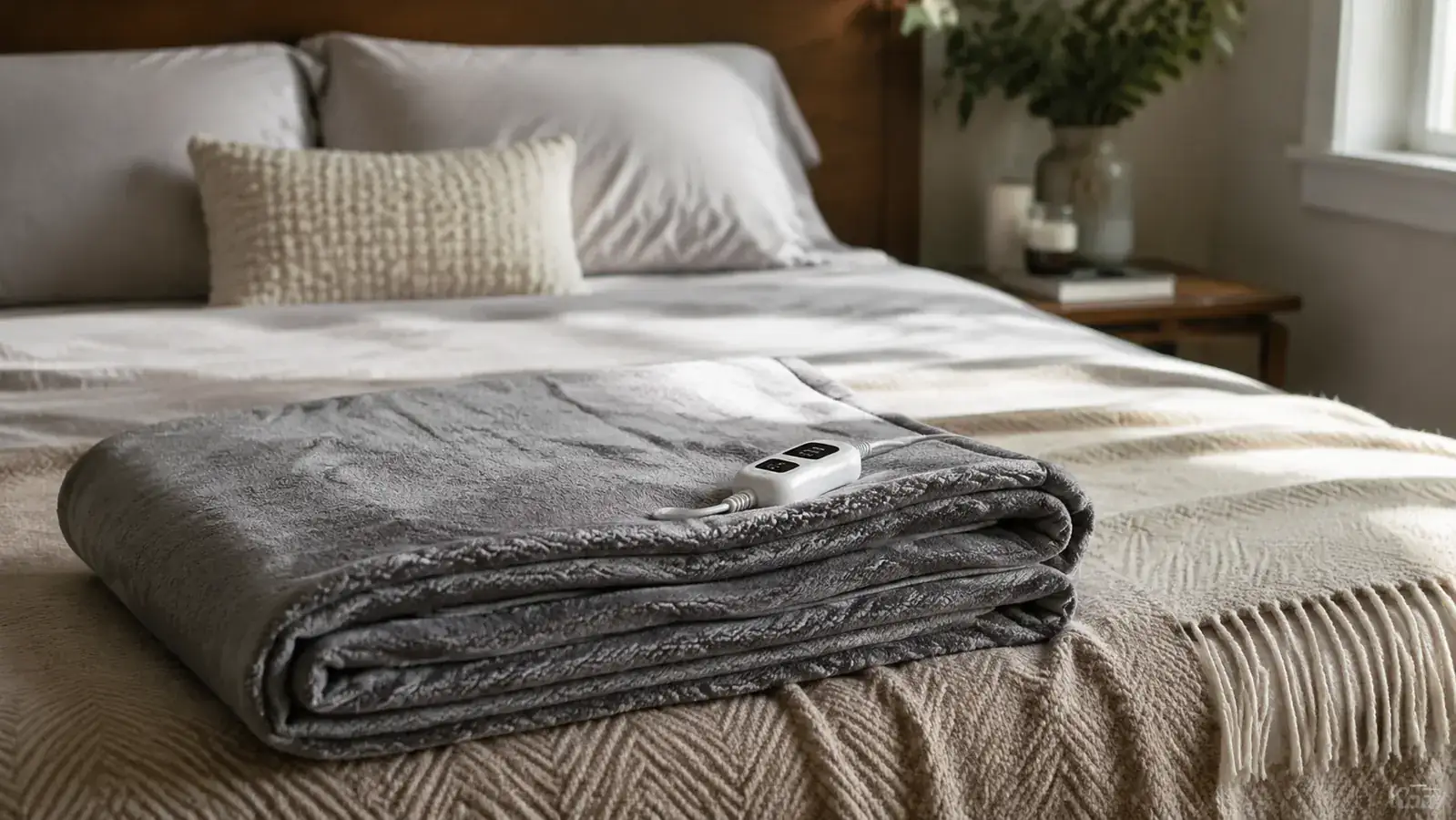
If you're the one person in the house who's always cold, if you work from a home office that the furnace never quite reaches, or if you're trying to shave a few degrees off your winter thermostat setting without freezing while you do it, this is a genuinely useful, low-cost tool. It's also a solid option for a drafty apartment where you don't control the building's heat schedule, or for anyone who wants something warmer than a regular throw blanket for movie nights or reading in bed before sleep.
Who Should Skip It
If you need to warm two or more people at once on a regular basis, get the queen size or look elsewhere, because the 50x60 throw genuinely isn't built for sharing. And if you have small children or pets who might chew on cords, or you're not comfortable managing a corded electric appliance around them, I'd think twice, or at minimum keep it somewhere they can't reach unsupervised. It's also not a fit if you were hoping to sleep under it all night the way you would a regular electric blanket, since Bedsure's own guidance is against leaving it running unattended overnight.
Four months in, this is still the first thing I reach for on a cold night.
If your living room runs cold the way mine does, the Bedsure heated blanket throw is one of the cheapest fixes I've tried. See today's price and current availability.
Amazon Check Today's Price on Amazon →