

I read in bed almost every night, usually for twenty or thirty minutes before my eyes give out. For years that meant stacking two flat pillows against the headboard, sliding down after ten minutes, and waking up the next morning with a stiff neck. I bought the Sasttie reading pillow in late April mostly out of frustration, not because I expected much from an inexpensive pillow with armrests. Eleven weeks and roughly seventy nights of use later, I have a clear picture of what it's good at and where it starts to show its age.
This isn't a first-week impression. I used it every night I read, most mornings I drank coffee in bed with my laptop balanced on my knees, and a handful of afternoons when I was sick and needed to sit up for hours at a stretch. My back has a mild curve from years at a desk job, so a pillow that doesn't hold its shape shows up fast for me.
I almost didn't buy it. I'd already been burned once by a reading pillow that looked identical in photos and fell apart within a month, arms sagging flat, seams splitting at the corners. So this review leans harder on durability than most, because that's the thing I actually needed answered before spending money on another one.
The Quick Verdict
A genuinely supportive bed-rest pillow that held its shape for eleven weeks of nightly use, loses a little polish on breathability and long-term firmness.
Amazon Check Today's Price →Tired of pillows that go flat by week two, not week eleven
The Sasttie reading pillow is the one back-rest pillow I've used long enough to trust. Check today's price and see if it's in stock.
Amazon Check Today's Price on Amazon →How I've Used It
My testing wasn't scientific, it was just my actual life. I set the pillow against my headboard every night starting the last week of April, read for twenty to forty minutes, then either fell asleep against it or moved it to the floor. On weekends I used it for an hour or two in the morning while my husband Dean made coffee and I caught up on email from my phone. I also used it on the couch twice when I had a cold and wanted to prop myself up to breathe easier.
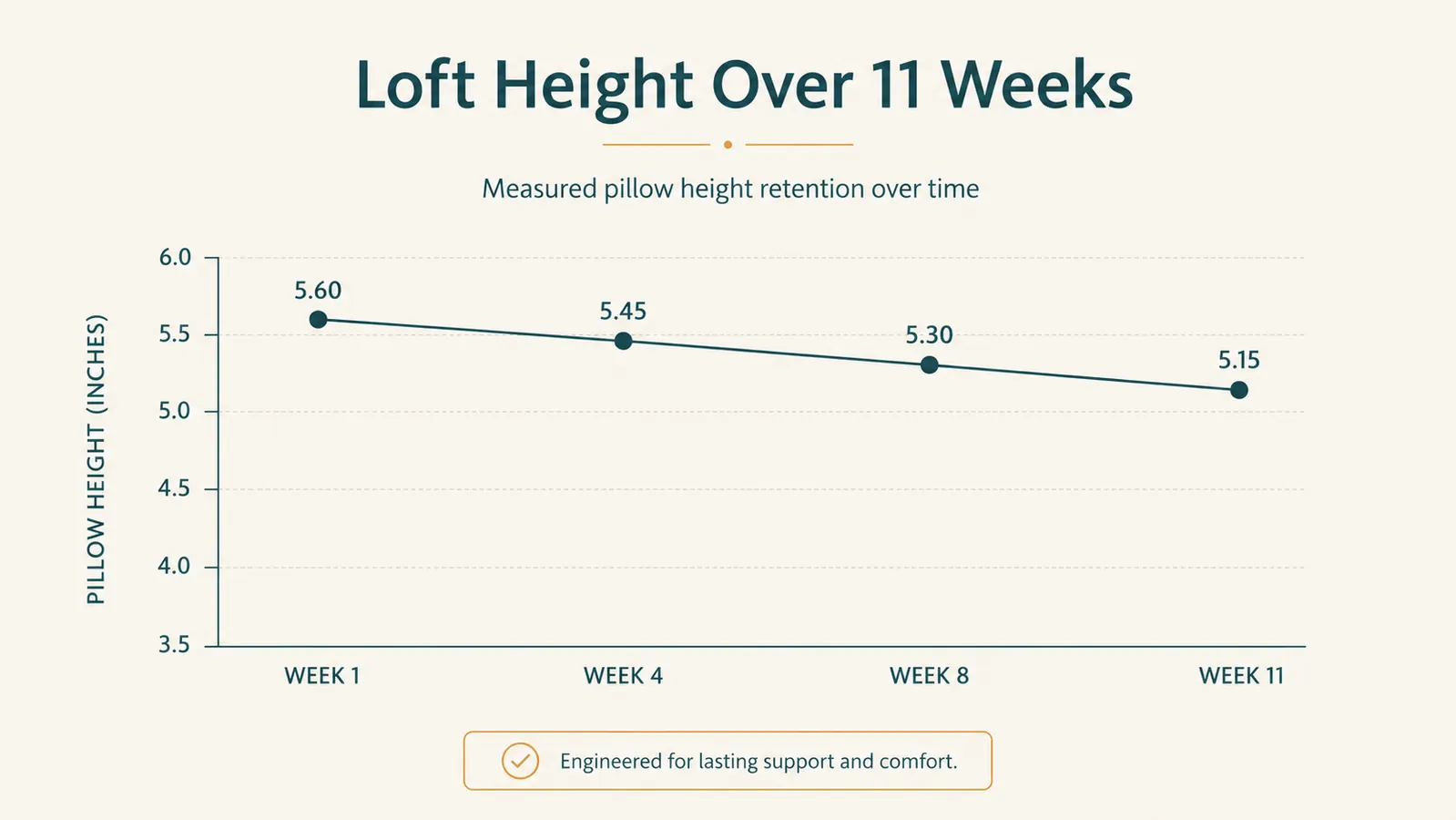
I measured the loft height with a tape measure at week one, week four, week eight, and week eleven to see how much the fill compressed. I also tracked whether the arms stayed rigid enough to actually hold my elbows up, since that's the whole point of a pillow like this over a flat one.
I did not baby it. It got shoved to the floor most mornings, sat on by our cat Biscuit more times than I can count, and once got left in a sunny window for most of a Saturday. If it was going to sag or discolor from real use, eleven weeks was enough time for that to show.
The first night set the tone. I set it up around 9:30, propped two extra bed pillows behind it out of habit, then realized halfway through the chapter I hadn't needed them at all. That was the first sign this was doing something a flat pillow stack couldn't.
By week six I stopped thinking about it entirely, which is probably the best sign of all. I wasn't adjusting it mid-chapter anymore or fishing a second pillow out from behind it. It had just become part of the nightstand routine, the way a good reading lamp disappears into the background once you trust it to work.
Built Like an Actual Chair, Not a Pillow
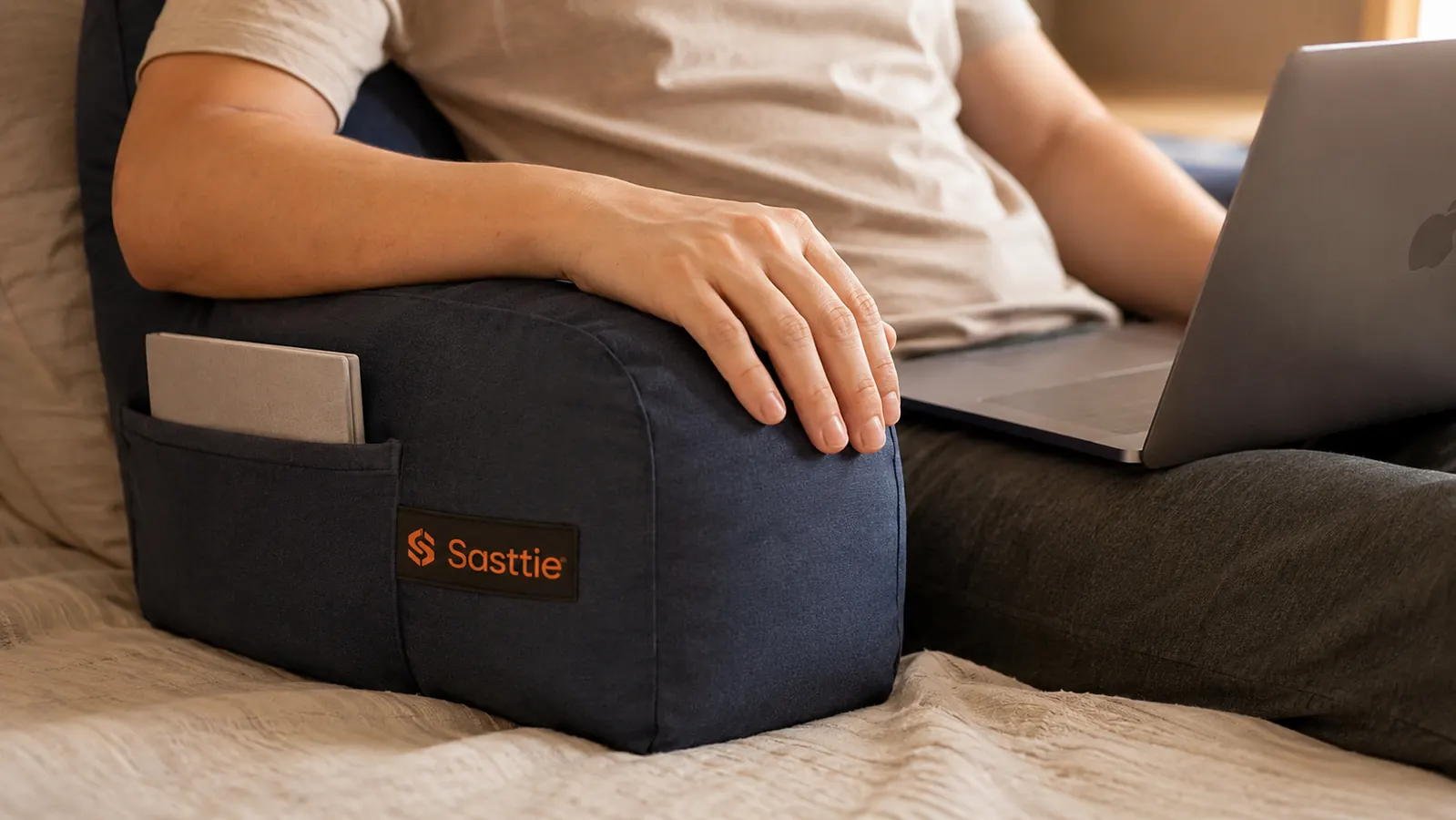
The first thing I noticed pulling it out of the box was how structured it felt compared to the shredded memory foam back-rest I'd tried two years ago and returned. The Sasttie uses a firmer polyester fill in the base and back panel, with the armrests stuffed dense enough that they don't collapse the moment you rest an elbow on them. The back panel has a slight curve built in, not a flat wall, which matches the small of my back better than I expected for something in this price range.
The cover is a soft, brushed polyester that isn't quite as breathable as cotton, but it's held up to weekly washes without pilling or losing its color. There's a small side pocket stitched onto the right armrest, just big enough for my phone or the paperback I'm not currently reading, which sounds minor until you realize how often you fumble around in the dark looking for your phone at 11pm.
What surprised me most is the base width. It's wide enough that it doesn't tip sideways when I lean into one arm to read on my side, which was my biggest complaint with a cheaper reading pillow I'd used before this one. That one would slide out from under me within twenty minutes. This one hasn't done that once.
I also tested how it handles being moved around, since I don't leave it on the bed all day. It's light enough to shift with one hand but keeps its shape when I set it back down, it doesn't flop over the way a softer bolster pillow does. Small thing, but after doing it seventy-plus times, small things add up.
The stitching along the seams where the arms meet the back panel is reinforced with a double row, which I only noticed because I went looking for it after my last pillow failed exactly there. Eleven weeks in, there's no fraying or pulling at those seams, even with the amount of shifting and leaning I put it through.
Eleven Weeks In: Does It Still Hold Its Shape
This is the part most reviews skip, because most reviewers write after a week of use. At week one, the loft measured just over 15 inches at the tallest point of the back panel. By week four it had dropped to about 14.5 inches, which I mostly attributed to the fill settling in, the same way a new couch cushion softens after you break it in. By week eight it held steady around 14 inches, and at week eleven it measured 13.75 inches. That's roughly an 8 percent decrease in loft over nearly three months of near-daily use, which is a smaller drop than I expected.
The armrests are the real test, and they're the part that's impressed me most. They're still firm enough to support my forearms without bottoming out, even after Biscuit has flattened himself across one arm on a near-daily basis. If anything, the back panel has softened slightly more than the arms, which actually makes sense for how I use it, I want more give against my spine and more rigidity under my elbows.
The zipper on the cover, which I was honestly worried about given how often I wash it, is still smooth. No snags, no separated teeth. That's a small detail, but it's usually the first thing to fail on a budget pillow.
Honestly, I expected worse. My old wedge cushion had gone visibly lopsided by week six, one side flatter than the other from always leaning the same direction to reach my nightstand. The Sasttie hasn't developed that lean yet, which I credit to the wider, more evenly distributed base fill.
What I Compared It To Before Buying
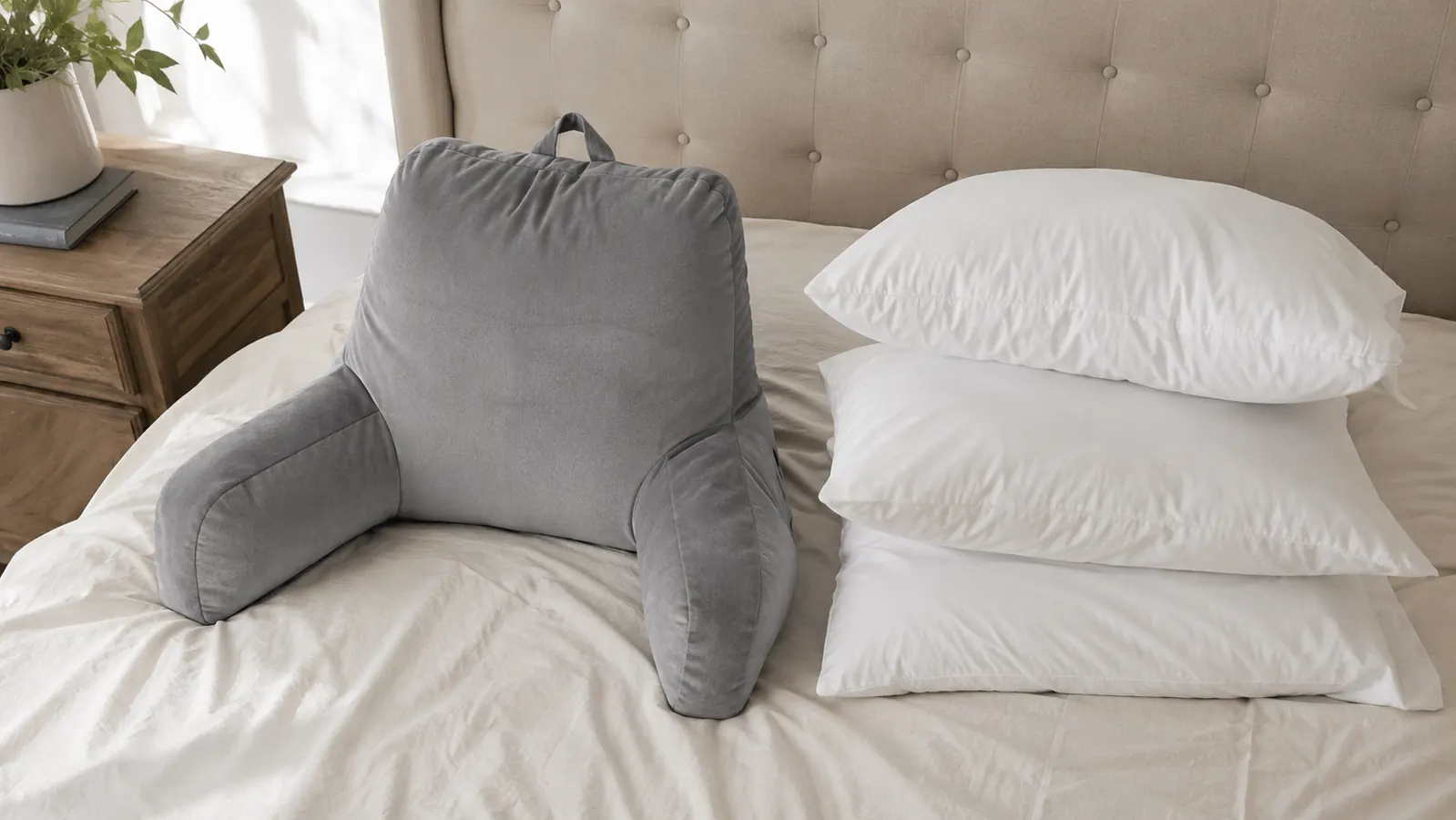
Before I bought the Sasttie, I'd been making do with two regular bed pillows stacked against the headboard, sometimes three on nights when my back was worse. It worked in the sense that I could sit up, but the stack always shifted. I'd read for fifteen minutes, feel myself sliding down, and have to re-stack everything, which usually ended with me giving up and turning off the light early.
I also looked at a wedge-style back-rest cushion a friend has, the kind without arms, just a foam triangle. It's fine for sitting more upright but does nothing for your elbows, and if you're holding a phone or a book with both hands for more than a few minutes, your arms start to ache. The armrests on the Sasttie turned out to matter more than I expected going in. I underestimated how much they'd change the actual experience of reading in bed versus just sitting up in bed.
The stacked-pillow approach is still what most people default to because it's free, you already own the pillows. But after using a shaped back-rest pillow for eleven weeks, going back to a loose stack feels genuinely worse, not just less convenient.
Cost mattered to me too, since I'd already wasted money once on a pillow that didn't last. I wasn't looking for the cheapest option on the page, I was looking for something that wouldn't need replacing again in eight weeks. Eleven weeks in, it's paid for itself just in the nights I didn't have to re-stack pillows at midnight.
The Trade-off Nobody Mentions
Here's my honest complaint. The polyester cover, while durable, traps more heat than a cotton pillowcase would. On warmer nights in June, I noticed my back getting a little sweaty after twenty or thirty minutes propped against it, especially with our bedroom fan off. It's not unbearable, but if you run hot at night or live somewhere humid, this is worth knowing before you buy.
The other trade-off is storage. It's a bulky pillow, roughly the size of a small ottoman cushion, and it doesn't compress down for easy storage the way a flat pillow does. I keep mine propped in the corner of the bedroom during the day, which works fine for us but might be annoying in a smaller space or if you're sharing a bed and don't want it visible all day.
One smaller gripe, the armrests sit a little high for me at five foot three. I've gotten used to it, but if you're on the shorter side, expect your shoulders to ride up slightly rather than resting flat against the arms the way a taller person's would.
I'll also say the color options are limited if you're picky about matching your bedding. Mine is a plain charcoal gray that works with everything, but if you wanted something bolder, the choices were thin when I ordered.
What I Liked
- Held its shape well over eleven weeks of near-daily use, only about an 8 percent loft drop
- Armrests stay firm enough to actually support your elbows, not just decorative
- Wide, stable base that doesn't tip or slide during side-leaning reading
- Zipper and stitching have held up through weekly washes
- Small side pocket is genuinely useful for a phone or second book
Where It Falls Short
- Polyester cover traps more heat than cotton on warm nights
- Bulky shape makes it awkward to store out of sight
- Back panel softened faster than the armrests, so firmness isn't perfectly even after a few months
I underestimated how much the armrests would change things. It's not a pillow that helps you sit up, it's a pillow that helps you actually stay sitting up.
Who This Is For
If you read in bed regularly, work from your laptop propped up in the morning, or need to sit upright for extended periods because of a cold, surgery recovery, or a bad back, this earns its spot. It's especially good if you've been making do with a stack of regular pillows that never quite stays put. Anyone who's tried a flat wedge cushion and missed having somewhere to rest their arms will notice the difference immediately.
It's also a solid pick for anyone who works from bed occasionally, whether that's answering emails on a sick day or just not wanting to get up before coffee kicks in. The armrests do double duty for a laptop or tablet, not just a book.
Who Should Skip It
If you sleep hot or live somewhere without air conditioning, the polyester cover might bother you more than it bothered me. And if you're tight on bedroom storage or share a small space, the bulk is a real consideration, not a nitpick. Someone who only reads in bed occasionally, once a week or less, probably won't get enough use out of it to justify replacing a stack of pillows they already own.
It's also probably not worth it if you're shopping purely on price and plan to replace it every year anyway. This one is built for someone who wants to buy a reading pillow once and be done thinking about it.
Eleven weeks in and it's still the pillow I reach for every night
If your back's tired of sliding down a pillow stack, this is worth a look. Check today's price on Amazon before it changes.
Amazon Check Today's Price on Amazon →