
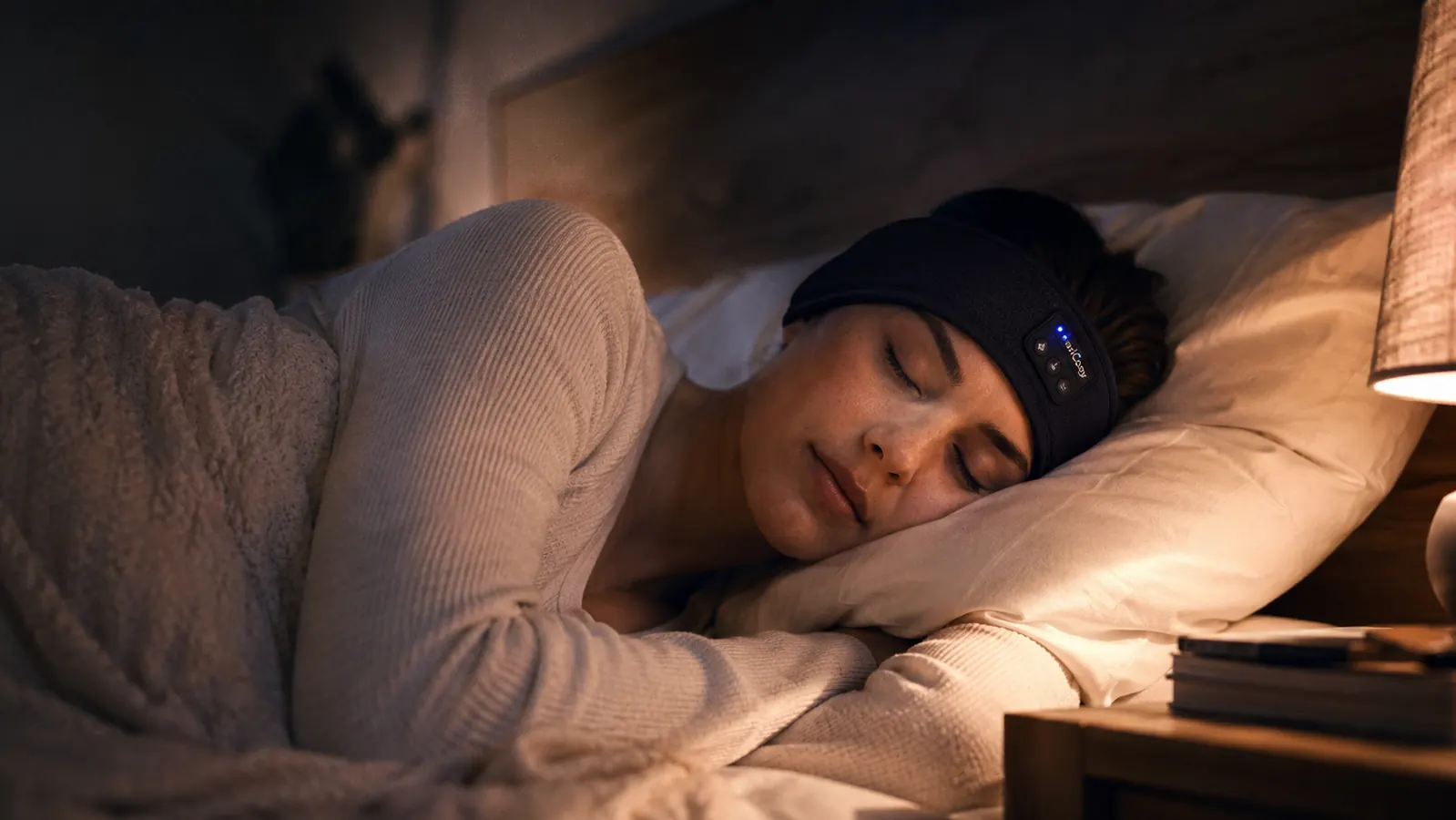
I spent about six years falling asleep to podcasts before I figured out I was doing it wrong. Not the podcasts part, the headphones part. I went through three different pairs of wireless earbuds, and every single one turned into a nightly fight. I'd roll onto my side, the way I sleep every night, and a hard plastic case would jam straight into my ear canal. I'd wake up at 2 a.m. with one bud missing in the sheets, or a charging cable looped around my neck like I'd lost an argument with my nightstand.
The fix wasn't a better pair of earbuds. It was switching to a headband-style sleep headphone, the kind with flat speakers built into a soft fabric band instead of anything that goes inside your ear. I've been sleeping in a pair of Perytong Sleep Headphones for months now, and it's the first setup that survives an entire night of side sleeping without me noticing it's there. This guide walks through exactly how I set mine up so it actually works, not just the gear, but the fit, the routine, and the small habits that make the difference between a headphone that helps you sleep and one that keeps you up fussing with it.
Before I get into the steps, I want to be clear about who this is for. If you fall asleep fine in silence, you don't need any of this. But if your brain needs something to focus on besides your own thoughts, a podcast, an audiobook, rain sounds, and you've been stuffing regular earbuds under your head every night hoping it'll stop hurting eventually, this guide is for you. It won't, not with the wrong gear. It will with the right one.
Stop losing earbuds in your sheets every night
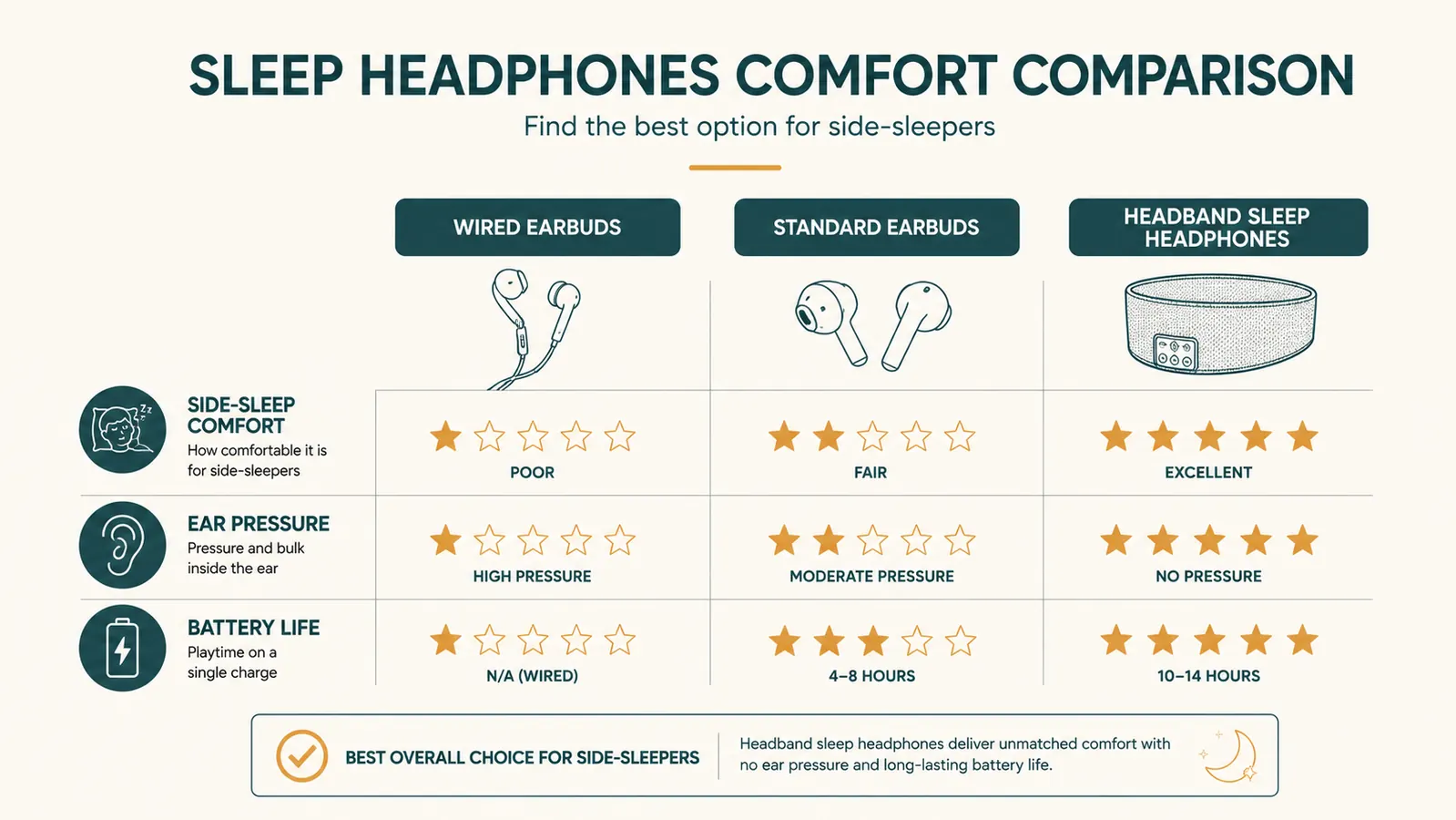
If you're a side or stomach sleeper, the headphone shape matters more than the sound quality. A flat, over-the-ear speaker built into a soft headband is the only style that disappears under your head instead of digging into it.
Amazon Check Today's Price on Amazon →Step 1: Choose Headband-Style Headphones, Not Earbuds
This is the step that actually matters most, and most people skip it because they already own earbuds and figure they'll just make those work. I did the same thing for years. The trouble is physical, not a matter of getting used to it. Standard earbuds, even the small stem-style ones, have a case that sticks out past your ear. When you lie on your side, that case is exactly where your head weight lands. There's no fit adjustment that fixes it because it's a shape problem, not a comfort problem.
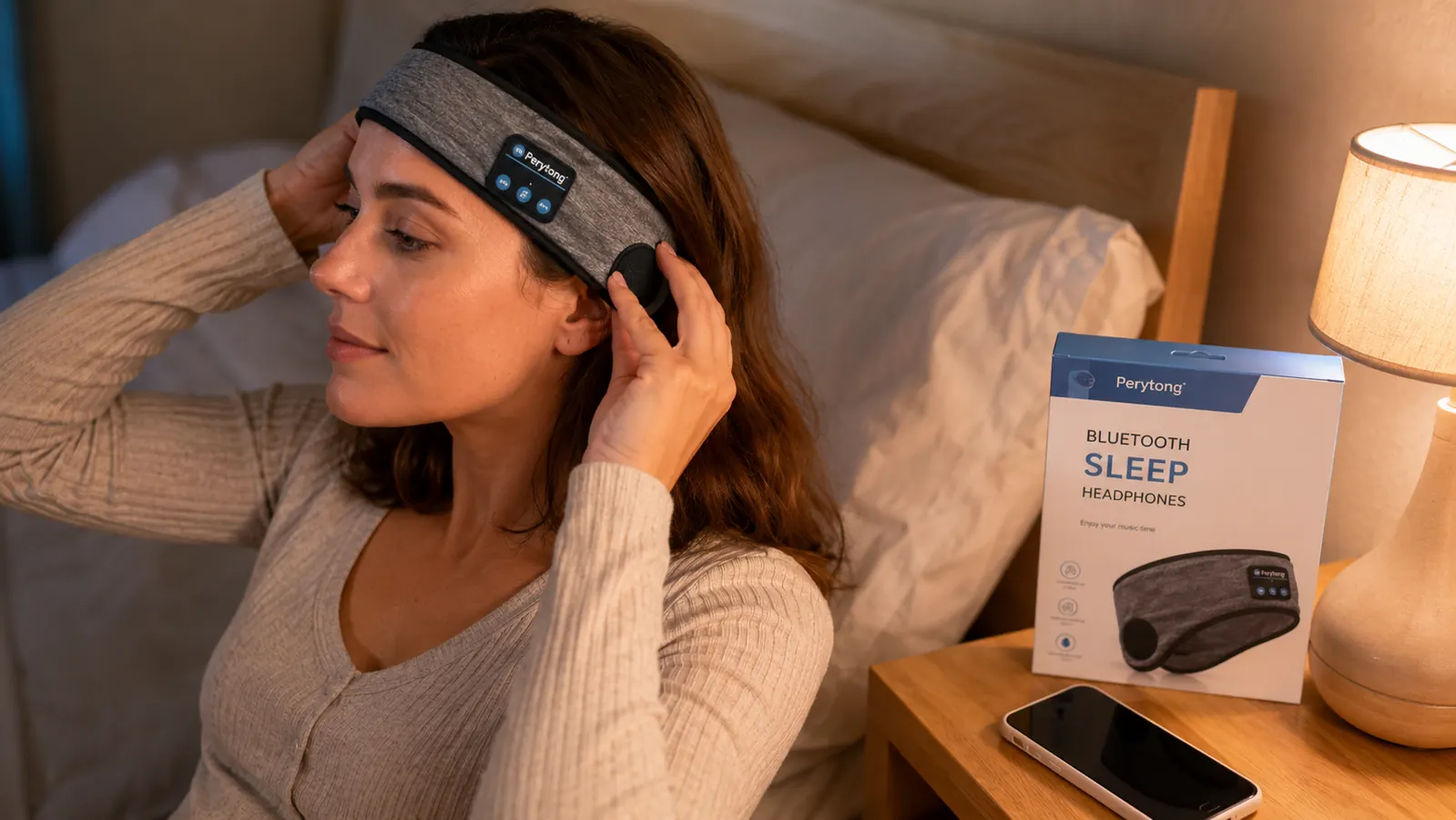
A headband-style sleep headphone solves this by moving the speaker out of your ear canal entirely. The Perytong band uses ultra-thin HD speakers sewn flat into a stretchy fabric headband, so the part that makes sound sits against the outside of your ear, not inside it. Nothing protrudes. When you turn your head into the pillow, the band compresses slightly against the mattress the same way a soft headband would, instead of pressing a hard edge into your cartilage.
It also solves the losing-earbuds problem. I can't tell you how many mornings I found a single AirPod stuck to my cheek or buried in the comforter. With a one-piece band, there's nothing small enough to lose, and nothing that can slip out of your ear and roll under the bed at 3 a.m. while you're half asleep trying to find it.
One thing I didn't expect: the fabric itself matters. My first cheap headband was a thick polyester blend that trapped heat, and I'd wake up with a damp forehead even in a cool room. Look for a band made from a thinner, breathable knit, the kind that feels closer to an athletic headband than a winter hat. It's a small detail, but it's the difference between a band you tolerate and one you actually reach for on your own.
Step 2: Get the Fit Dialed In Before You Ever Hit Play
The first night I wore mine, I put the band on the way I'd wear a normal headband, pulled snug across my forehead. That was a mistake. It felt fine sitting up, then thirty minutes later I had a dull ache across my temples that woke me back up. The fix was simple once I found it: position the band lower, so the speakers sit centered over the middle of your ear rather than up near your temple, and loosen it until it's just snug enough to stay put when you turn your head.
Test the fit sitting up first. Turn your head side to side and nod like you're checking blind spots in a car. If the band shifts more than an inch or the speaker slides off-ear, tighten it slightly. If you feel any pressure point after a minute of wearing it, it's too tight, loosen it a notch. You're aiming for a fit you forget about, not one you're aware of holding your head.
Hair matters more than people expect. If you have thick or long hair, gather it low or into a loose braid before putting the band on. A speaker sitting on a thick knot of hair instead of flat against your ear won't transmit sound clearly and will feel lumpy under your head. I braid mine most nights now, it took the fit from decent to actually forgettable.
If you wear glasses to read in bed, take them off before you position the band. The band's edge and the glasses arm want to occupy the same real estate above your ear, and fighting both at once is how you end up with the band riding too high. Get your glasses off first, then settle the band into its low, centered position.
Step 3: Set Up a Wind-Down Audio Routine
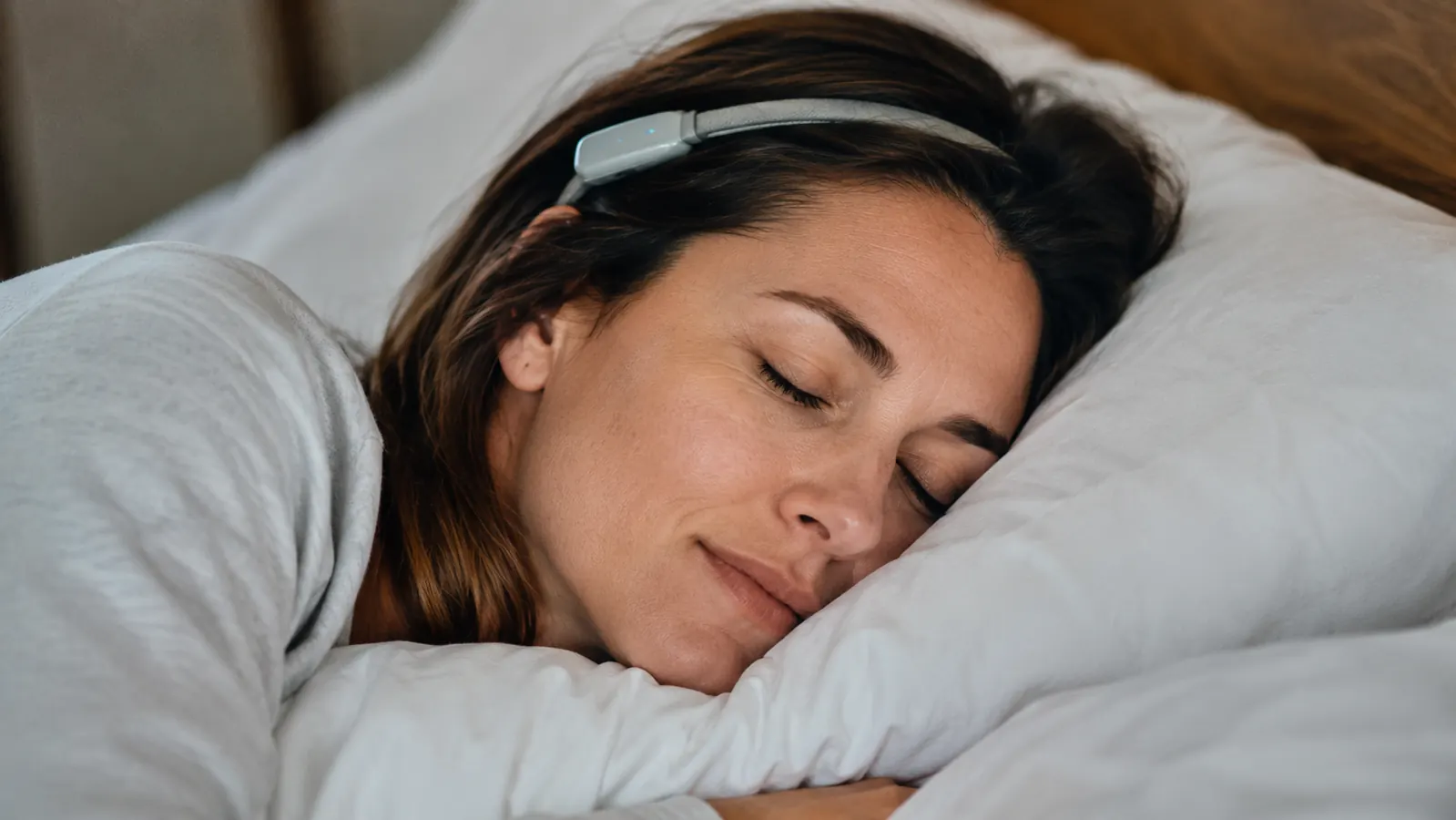
What you listen to changes how well this works almost as much as the headphones do. I made the mistake early on of falling asleep to true crime, which is a genre built entirely around jump scares and cliffhangers. My brain would spike awake right as I was drifting off because someone found a body. I switched to slower content, an old audiobook I've already heard, a low-key history podcast, ambient rain sounds, and the difference in how fast I actually fall asleep is noticeable.
Volume matters too. I keep mine around 30 to 40 percent, quiet enough that I have to focus slightly to follow it, which is exactly the point. If it's loud enough to easily track every word, it's loud enough to keep you alert. The goal is background presence, not a show you're trying to watch.
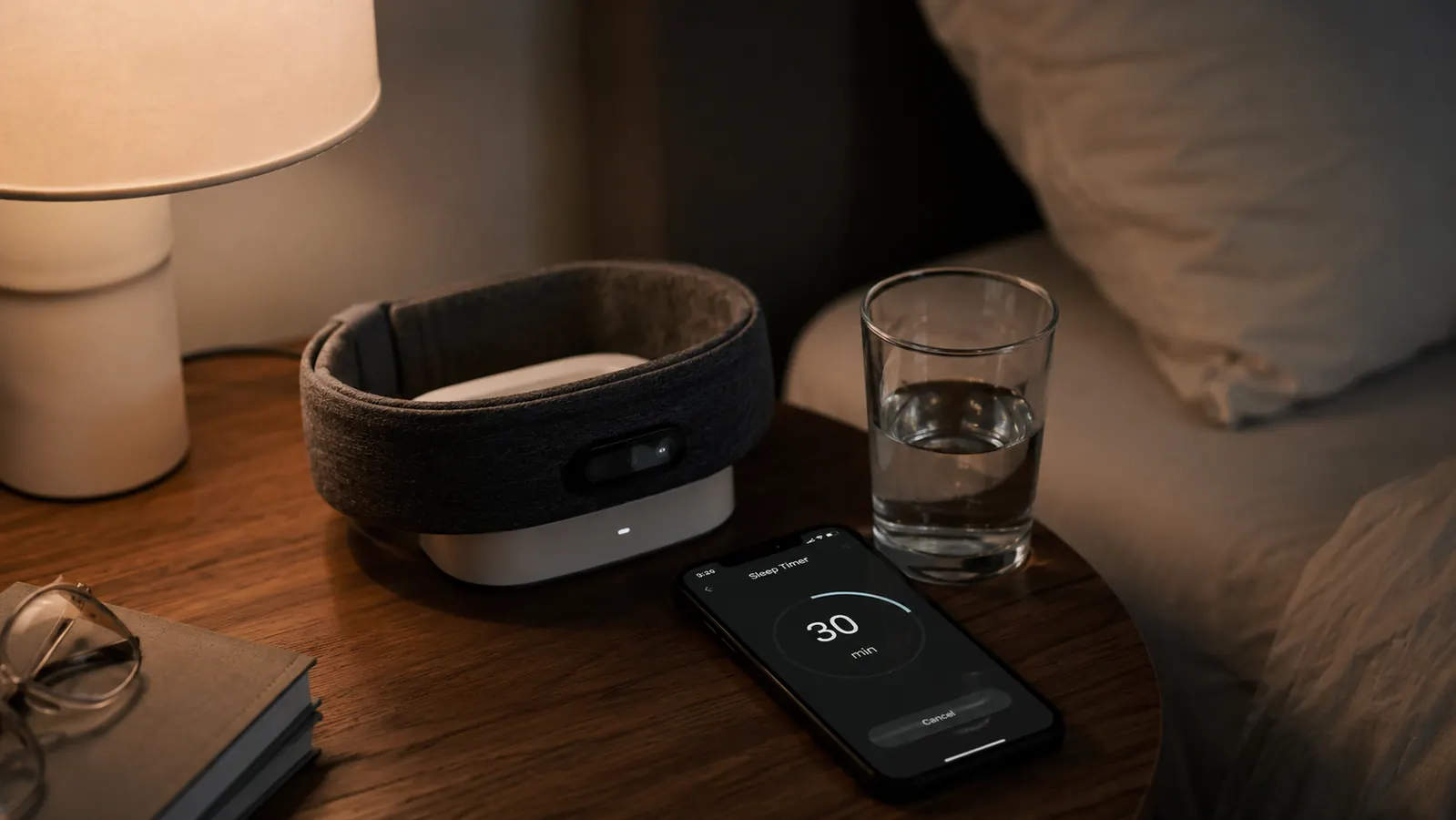
Set a sleep timer every time. Most podcast and audiobook apps have a built-in sleep timer, usually 30 or 45 minutes, that fades the audio and stops playback. Without it, you'll wake up at 4 a.m. to a completely different show or a dead battery, and that jolt of confusion is its own way to ruin a good night's sleep. I set mine before I even put the band on, it's a two-second habit that saves the whole routine.
Pick your content before you're already lying down. Scrolling through a podcast app in the dark, phone brightness cranked up, defeats half the point of trying to wind down. I choose the next episode while I'm brushing my teeth, so by the time the lights are off, all I have to do is press play and close my eyes.
Step 4: Solve For Your Sleep Position
Side sleepers, this is where the headband earns its keep. Lie down the way you normally do and let your ear press into the pillow. A flat speaker will compress slightly and flatten under the pillow's weight, which is fine, it's designed for that. What you're checking for is any hard edge, usually from the Bluetooth module tucked into the back of the band. Rotate the band slightly so that module sits behind your ear or at the base of your skull, away from direct pillow contact.
Back sleepers generally have the easiest time, since neither ear is under direct pressure, but the band can still ride up toward your eyes overnight. Pull it down snug across your forehead, just above your eyebrows, before you settle in. Stomach sleepers have it hardest with any headphone, honestly, since your whole face is in the pillow. If that's you, try positioning the band slightly higher, more like a sweatband, so the speakers sit toward the top of your ears instead of dead center, which keeps most of the pressure off.
If you toss and turn between positions, which most of us do without noticing, don't overthink the fit for one specific position. Get it snug and centered when you're on your back, and let it adjust naturally as you move. The fabric band flexes with you instead of staying rigid, which is the whole advantage over a hard headphone frame.
If you share a bed, keep the volume low enough that your partner can't hear it from their pillow, even with the room quiet. Bluetooth sleep headphones don't leak sound the way open-back earbuds sometimes do, but at higher volumes you'll still get a faint hiss that's audible a foot away. I learned this the night my husband asked, half asleep, why I was listening to what sounded like a tiny angry bee.
Step 5: Handle Charging, Hygiene, and the Morning After
Charge it during your evening routine, not right before bed. I plug mine in while I'm brushing my teeth and washing my face, about 15 to 20 minutes, which is usually enough for a full night's use if I charged it at all recently. Waiting until you're already in bed to remember it's at 12 percent battery is how you end up back on the earbuds you were trying to quit.
Wash the band every week or two. It's fabric, it sits against your scalp and ears for eight hours a night, and it will pick up oil and sweat the same way a headband or hat does. Most sleep headbands, including the Perytong, are hand-washable or have a removable speaker module so you can wash the fabric shell separately. A band that starts to smell or feel stiff is one you'll stop reaching for, so keep it on a simple cleaning schedule.
Keep a charging spot that's part of your nightstand setup, not buried in a drawer. Mine sits on a small stand next to my lamp, so plugging it in is as automatic as setting an alarm. The nights I forget are always the nights it ends up somewhere in my luggage or a jacket pocket, uncharged, three days later.
What Else Helps
The headphones solve the mechanical problem, comfort and not losing earbuds, but a few habits around them make the whole system work better. Keep your phone across the room, not on the nightstand, so you're not tempted to check it the second the audio stops. Keep the room slightly cool and dark, since your ears are covered but your eyes and skin still respond to light and temperature the same as always. And be honest with yourself about content, if a show keeps you engaged enough to want to know what happens next, it's not a sleep show, save it for the drive to work instead.
None of this replaces good sleep hygiene, a consistent bedtime, a dark room, cutting off caffeine by early afternoon. The headphones are one piece of a routine, not a replacement for one. But for those of us who genuinely fall asleep better with something in our ears, having a pair that doesn't hurt, doesn't get lost, and doesn't wake you up at 2 a.m. is the difference between this being a nightly ritual and something you give up on after a week.
A few readers have asked whether these are worth it if you only use them occasionally, on a plane or during a bad allergy week when white noise helps you tune out congestion. Honestly, yes. The band folds flat, takes up almost no room in a bag, and doesn't require the fussing that earbuds do. I keep mine in my carry-on year-round now, not just for travel nights but for the nights at home when the neighbor's dog decides 11 p.m. is a good time to bark at nothing.
The fit you forget about beats the fit you have to think about. That's the whole test.
Ready to actually sleep in your headphones tonight?
A flat headband speaker fixes the two things that ruin every other pair for side sleepers: the pressure point and the lost earbud. Check today's price and see the current reviews before you decide.
Amazon Check Today's Price on Amazon →