

My bedroom sits on the north side of the house, and every winter it turns into the one room the furnace seems to forget about. For two years my solution was cranking the thermostat to 70 and still going to bed in socks, a hoodie, and sometimes a knit hat, which is not a sustainable way to fall asleep or heat a house. What actually changed things wasn't the thermostat. It was switching to a proper heated throw, specifically the Bedsure flannel heated blanket with the preheat function, and learning to use it in a way that keeps heat on me all night instead of just for the first twenty minutes.
That second part matters more than people expect. I bought a cheaper heated blanket years before this one, used it wrong, and gave up on the whole category for a while because it either felt too hot to fall asleep under or had gone stone cold by 2 a.m. The blanket wasn't really the problem. My setup was. Here's the exact process I use now, five steps, that gets me warm within minutes and keeps me that way until my alarm goes off.
I also want to be upfront that this isn't about buying the most expensive space heater disguised as bedding. A 50 by 60 inch flannel throw runs well under what most people spend heating an entire room overnight with a plug-in heater, and it's a lot safer to fall asleep under. The steps below are the difference between a heated blanket that sits in a drawer by February and one you genuinely reach for every single night from November through March.
Stop layering hoodies under your comforter
A heated flannel throw with a real preheat function does more to warm a cold bedroom than another blanket layer ever will, and it costs less to run than nudging the thermostat up all night. The Bedsure is the one I set up using the steps below.
Amazon Check Today's Price on Amazon →Step 1: Preheat It Before You Get In, Not After
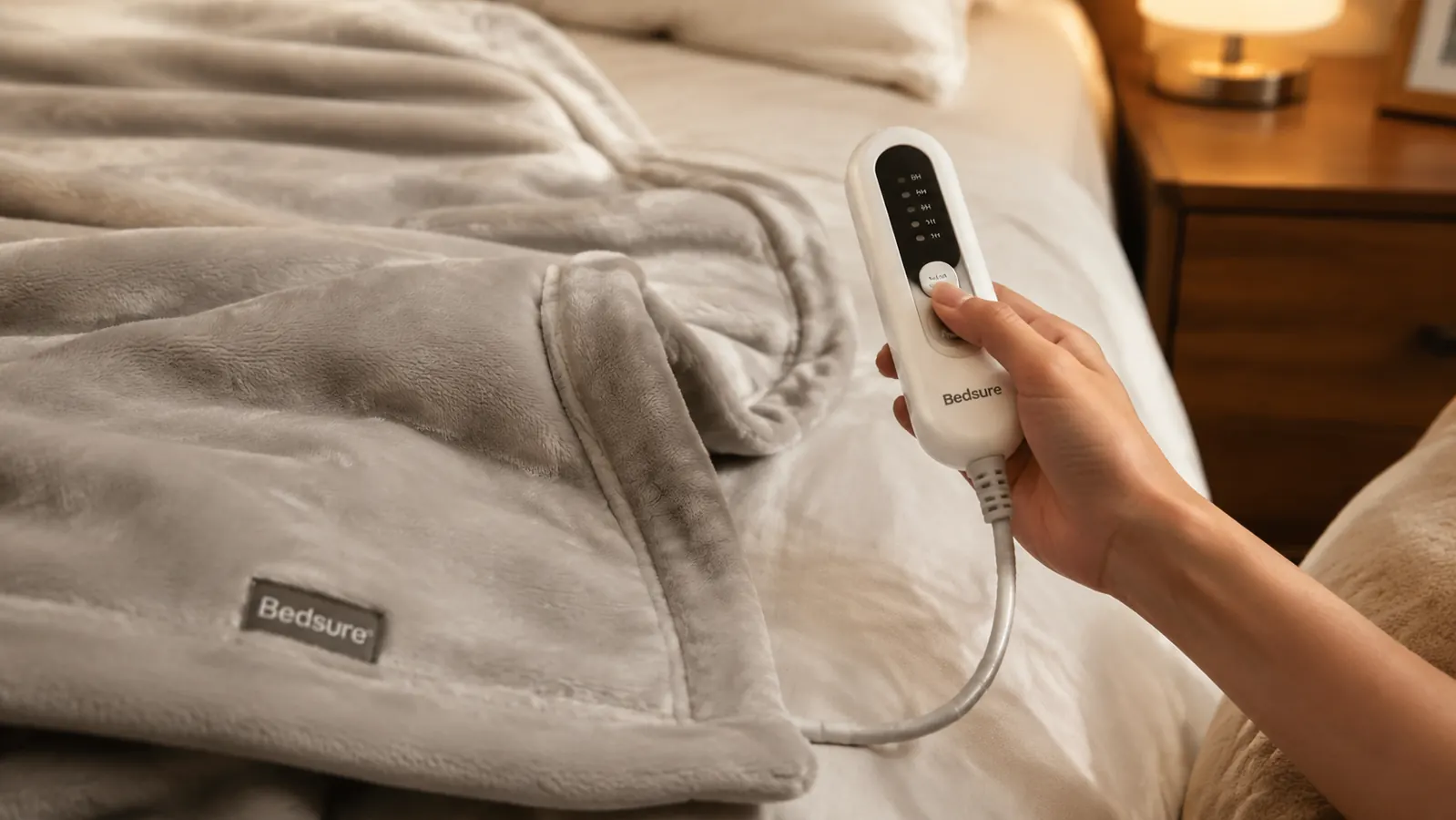
This is the single biggest fix, and it's the one most people skip. Climbing into a cold bed and then turning the blanket on means you spend the first fifteen or twenty minutes shivering while the flannel slowly catches up to your body heat, which defeats the point of owning a heated blanket in the first place. The Bedsure has a dedicated preheat button that runs the highest setting for about ten minutes before automatically stepping down, so I turn it on while I'm brushing my teeth and washing my face, roughly ten to fifteen minutes before I actually get in bed.
By the time I climb in, the flannel is already warm to the touch instead of room temperature, and there's no shiver-and-wait period at all. If your nightly routine is shorter than ten minutes, just hit preheat as soon as you walk into the bedroom for the night rather than waiting until you're actually changing into pajamas. The habit takes about three nights to stick, and after that it becomes as automatic as turning off the lights.
I've also started preheating the blanket for other things besides sleep, like the fifteen minutes I spend reading before bed. Wrapping up in an already-warm throw on the couch instead of turning up the whole living room takes the same ten-minute lead time, and it's honestly extended how much I use this blanket beyond just nighttime.
Step 2: Match the Heat Setting to Your Actual Room Temperature
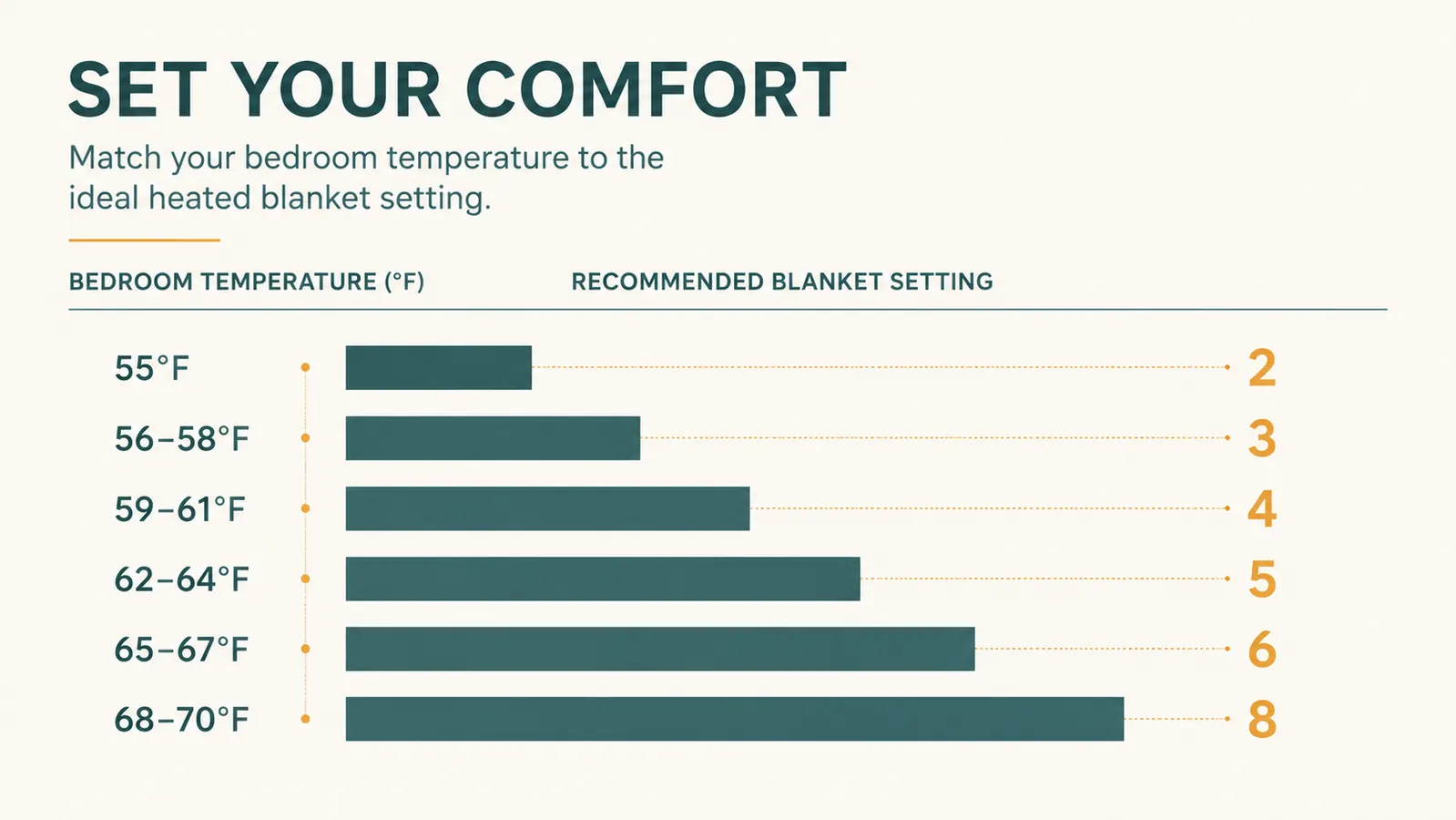
The Bedsure has ten heat settings, and I used to just pick a number that felt right in the moment, which meant I was either too hot at midnight or waking up cold by dawn. What works better is treating the setting like a thermostat number tied to your room, not a mood. In my bedroom, which usually sits around 62 to 64 degrees in the winter, setting 4 or 5 keeps me warm without overheating. On the rare nights it drops closer to 55, I'll bump it to 6 or 7 for the first hour and then dial back once the bed itself has warmed up.
The trick is checking a cheap room thermometer once and writing your personal numbers down somewhere, a sticky note on the nightstand works fine, so you're not guessing every single night. Cold nights need a higher starting setting, mild nights need less, and knowing your own baseline saves you from either sweating through the night or reaching for extra blankets at 3 a.m.
It's also worth noting that ten settings sounds like a lot until you realize most people only ever use three or four of them regularly. I bounce between 3, 5, and 7 depending on the season, and I've genuinely never touched setting 9 or 10 outside of testing the blanket the first night I owned it. Don't feel like you need to explore the full range to get your money's worth.
Step 3: Cover the Right Part of the Bed, Not Just Your Torso
Because this is a 50 by 60 inch throw and not a full bed-sized electric blanket, positioning matters more than it would with a bigger one. Most nights I lay it centered over my torso and legs with the extra length pulled down toward my feet, since feet are almost always the first thing to get cold and the last thing to warm back up. If I drape it evenly across my whole body instead, my feet end up under the thinnest, least-heated section, and that's exactly where I feel the cold first.
If you sleep with a partner who runs warmer than you, this is also where a throw actually beats a full electric blanket. I can pull it fully onto my side without heating up my husband's half of the bed, and he sleeps under the regular comforter without ever noticing the difference. A full-bed heated blanket forces both people to agree on one setting, which almost never works out evenly.
One more positioning tip that took me embarrassingly long to figure out. Tuck the bottom edge of the throw under the mattress near your feet instead of just laying it loose. It keeps the heat trapped in a pocket around your legs instead of letting warm air escape out the open end every time you shift positions, which matters a lot more on the coldest nights than it sounds like it would.

Step 4: Keep the Controller and Cord Somewhere You Won't Fight With Them
The controller clips onto the blanket with a short cord, and where you let that cord fall matters more than it sounds like it would. Early on I let it dangle off the side of the mattress, and I kept accidentally kicking it, knocking the setting to zero, or yanking the plug halfway out of the wall in my sleep. Now I run the cord up along the headboard side and clip the controller to my nightstand lamp cord with a small binder clip, so it stays within reach but out of the way of my legs.
It's also worth actually locating your nearest outlet before you buy, since the cord length is fairly generous but not infinite, and you don't want to be stretching it across a walkway where someone could trip on it in the dark. And like any electric blanket, never fold it over on itself while it's plugged in and running. Lay it flat, let the wiring inside do its job, and it'll last a lot longer.
If you have pets that sleep on the bed, this step gets even more important. My cat used to chew on cords out of curiosity, so I ran a short length of split-loom tubing over the exposed cord section near the controller, just a couple dollars from the hardware store, and it solved the problem completely without affecting how the blanket heats.
Step 5: Turn It Off (or Set the Timer) Before You're Fully Asleep
This one surprised me. I assumed running the blanket all night at a low setting was the goal, but I actually sleep better when I let it warm the bed for the first hour or two and then switch it off completely once I'm under the covers and drowsy. Flannel and a warmed mattress hold heat far longer than you'd expect, especially once your comforter is trapping it in, so the blanket has usually done its real work before you're even in deep sleep.
If you know you'll forget to turn it off, or you're someone who runs cold all night no matter what, the built-in auto shut-off after several hours is there as a backstop rather than a feature you should rely on for your main routine. I set a low overnight setting, usually 2 or 3, for the coldest weeks of January, and skip it entirely the rest of the season. Either way, get in the habit of checking the setting as part of your wind-down, the same way you'd check that the front door is locked.
One last practical note on this blanket specifically, since it comes up a lot in questions I get from readers. The whole thing is machine washable on a gentle cycle once you disconnect the controller, which matters more with a flannel throw than you'd think, since it's the kind of blanket that ends up on the couch, dragged around the house, and generally used far more than a decorative bed blanket ever would. I wash mine about once a month during the winter and it's held its softness and its even heating the whole time, no cold spots, no weird bunching in the fill.
What Else Helps
A heated blanket is doing one specific job, warming the layer of air closest to your body, and it's genuinely the highest-impact change I made for cold nights without touching the thermostat. But it's not the whole answer. A drafty window right next to the bed will undo a lot of that heat, so a simple draft snake or even a rolled towel along the sill makes a noticeable difference on the coldest nights. Cotton or flannel pajamas trap warmth far better than the t-shirt-and-shorts combo I used to sleep in, and keeping socks on, at least until the bed itself warms up, solves the cold-feet problem faster than any blanket setting will on its own.
If your whole house runs cold regardless of what you do in the bedroom, that's more of an insulation or furnace conversation than something a throw blanket can fully solve, but for most people the bedroom itself is the fixable part. I'd also say don't underestimate a heavier top layer working alongside the heated throw rather than instead of it. On the coldest nights I still keep my regular comforter over the Bedsure blanket, which traps the heat in rather than letting it radiate straight up into a cold room, and that combination has gotten me through every winter since without once turning the thermostat past 66.
The blanket doesn't need to run all night to keep you warm all night. It just needs to win the first hour.
Ready to stop shivering through winter
If you've been layering hoodies and extra blankets just to make it through a cold bedroom, the Bedsure heated throw with the preheat function is the one I use with the exact setup above.
Amazon Check Today's Price on Amazon →